.webp)
The EU AI Act and AI-generated fashion imagery: what you need to know before 2nd August 2026

-p-1600.webp)
If your brand has been using AI-generated imagery to fill its product detail pages, extend campaigns across colourways, or show buyers a collection before the samples arrive, there is a date you need to have in your calendar: 2 August 2026.
That is when the transparency rules of the EU AI Act start to apply. And AI-generated fashion imagery, the on-model images, packshots, and lookbooks that more and more brands now produce at scale, sits squarely inside their scope.
That deadline, and what it demands of fashion brands, is exactly what we unpacked in our recent Office Hours session with Dr. Simon Hembt (Counsel) and Oliver Belitz (Partner) of Bird & Bird's IP and technology practice. They walked through where AI-generated fashion imagery sits in the AI Act's risk framework, who carries the labelling obligation - the brand or the AI provider - and what compliant disclosure looks like in practice. The full session is available to watch on demand: Watch the recording
This is not a high-risk classification. It is not a ban. But it is a concrete legal obligation with a real deadline and real penalties attached. The trouble is that most fashion teams using AI imagery are not sure what the rules actually ask of them, who is responsible for what, or whether a line in the privacy policy is enough to stay compliant.
This post walks through the fundamentals: what the AI Act says about AI-generated images, where fashion imagery falls in the risk framework, what compliant disclosure looks like in practice, and the common assumptions that will not hold up. Treat it as the written companion to the session - the recording goes deeper on what the EU AI Act means for fashion brands specifically, and includes the live questions fashion teams put to the speakers.
A quick caveat first. This is a summary written for marketing and e-commerce teams, not legal advice. The grey areas in this law are genuine, and where your specific case sits is a question for a qualified lawyer. That is part of why we brought two of them into the room.
The deadline that applies to fashion brands
The EU AI Act is the European Union's law on artificial intelligence. It takes a risk-based approach, sorting AI systems into tiers and applying heavier obligations to the riskier ones. Some practices are banned outright. High-risk uses, such as AI in recruitment or credit scoring, carry strict requirements. Most other uses sit lower down.
The provision that matters for AI imagery is Article 50, the part of the Act that sets out transparency obligations. Article 50 applies from 2 August 2026, two years after the Act entered into force. It is worth being precise about what that means, because the obligation does not depend on a system being classed as high-risk. It applies to any AI system used in one of the situations the Article covers, regardless of risk tier.
In other words, you do not need to be running anything exotic to be in scope. If you publish AI-generated images to consumers in the EU, the rules are relevant to you.
Where AI fashion imagery sits in the framework
Article 50 covers four transparency situations. The one that captures AI-generated fashion imagery is the rule on so-called deepfakes.
The word "deepfake" sounds dramatic, and most people associate it with face-swap videos or fabricated clips of public figures. The Act's definition is much broader than that. Under Article 3, a deepfake is AI-generated or manipulated image, audio, or video content that resembles existing persons, objects, places, entities, or events and would falsely appear to a person to be authentic or truthful.
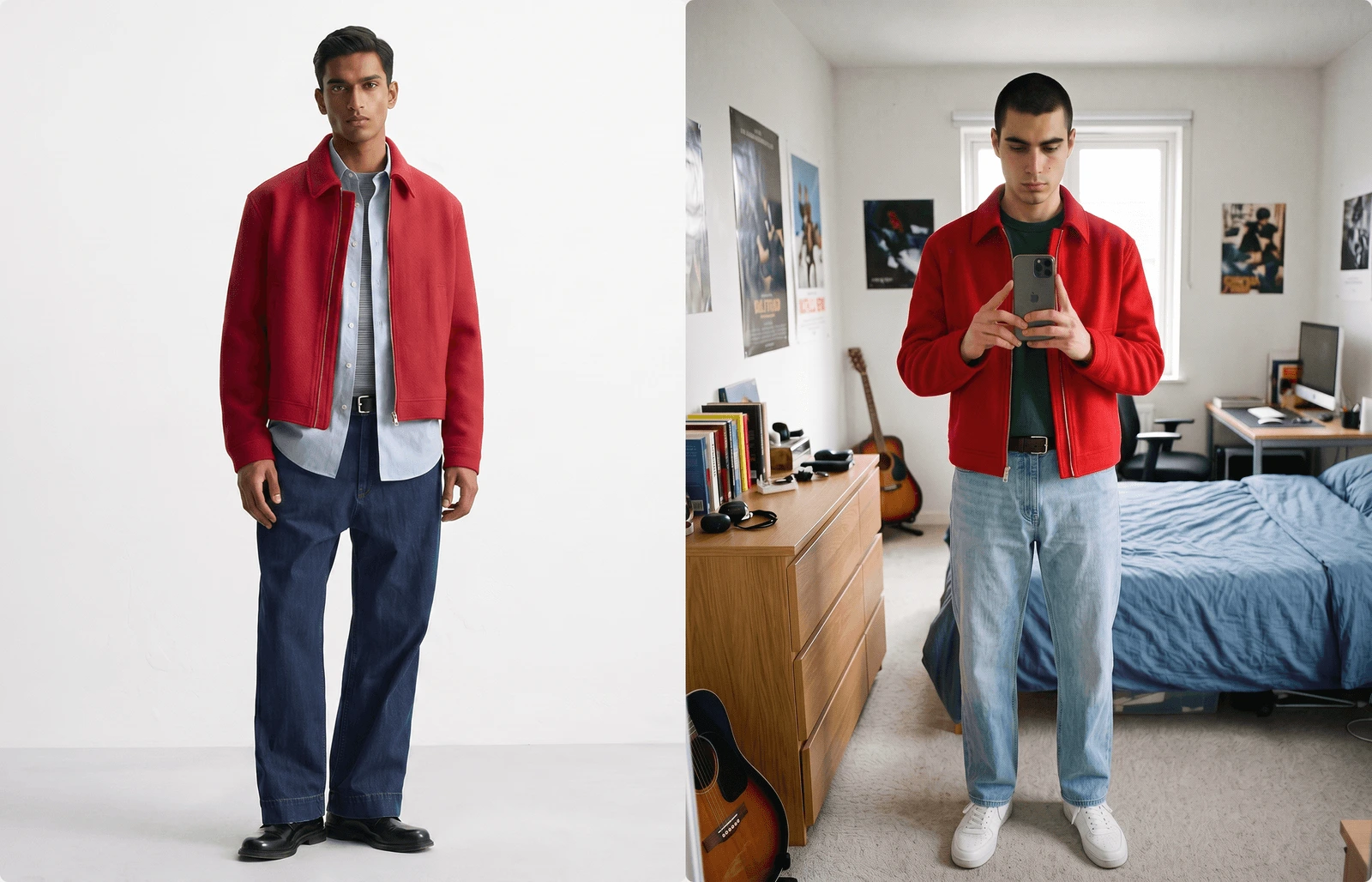
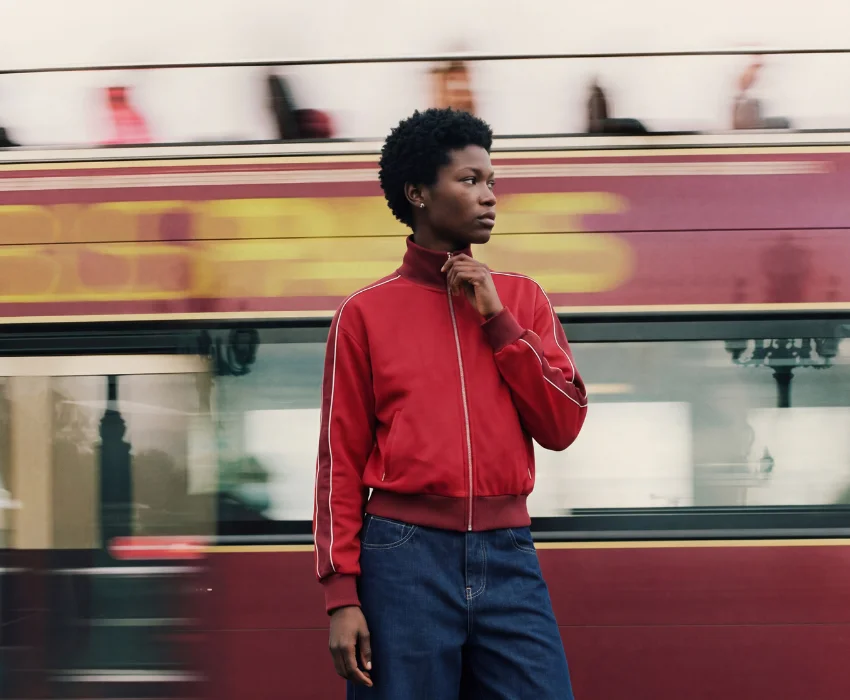
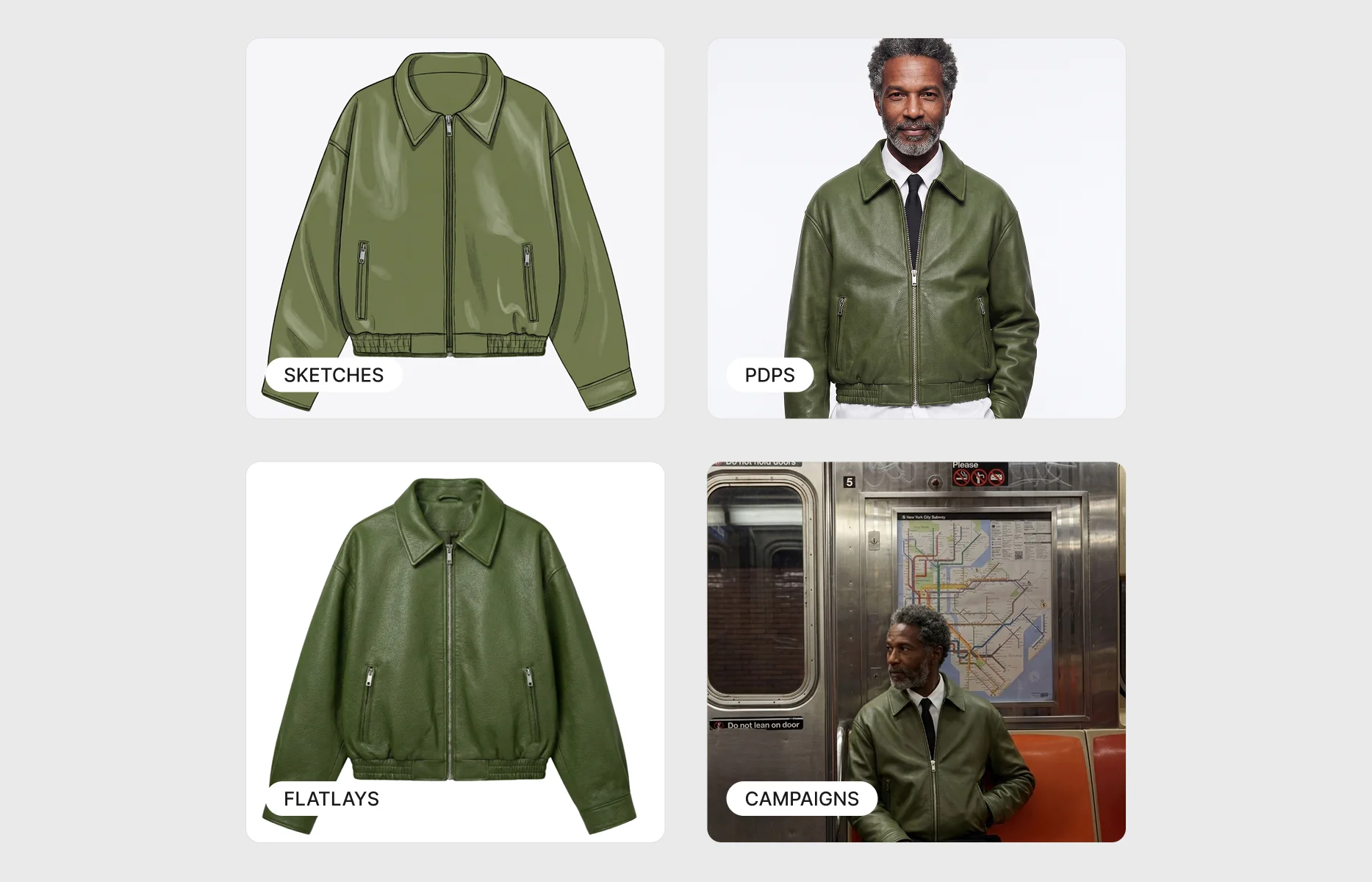
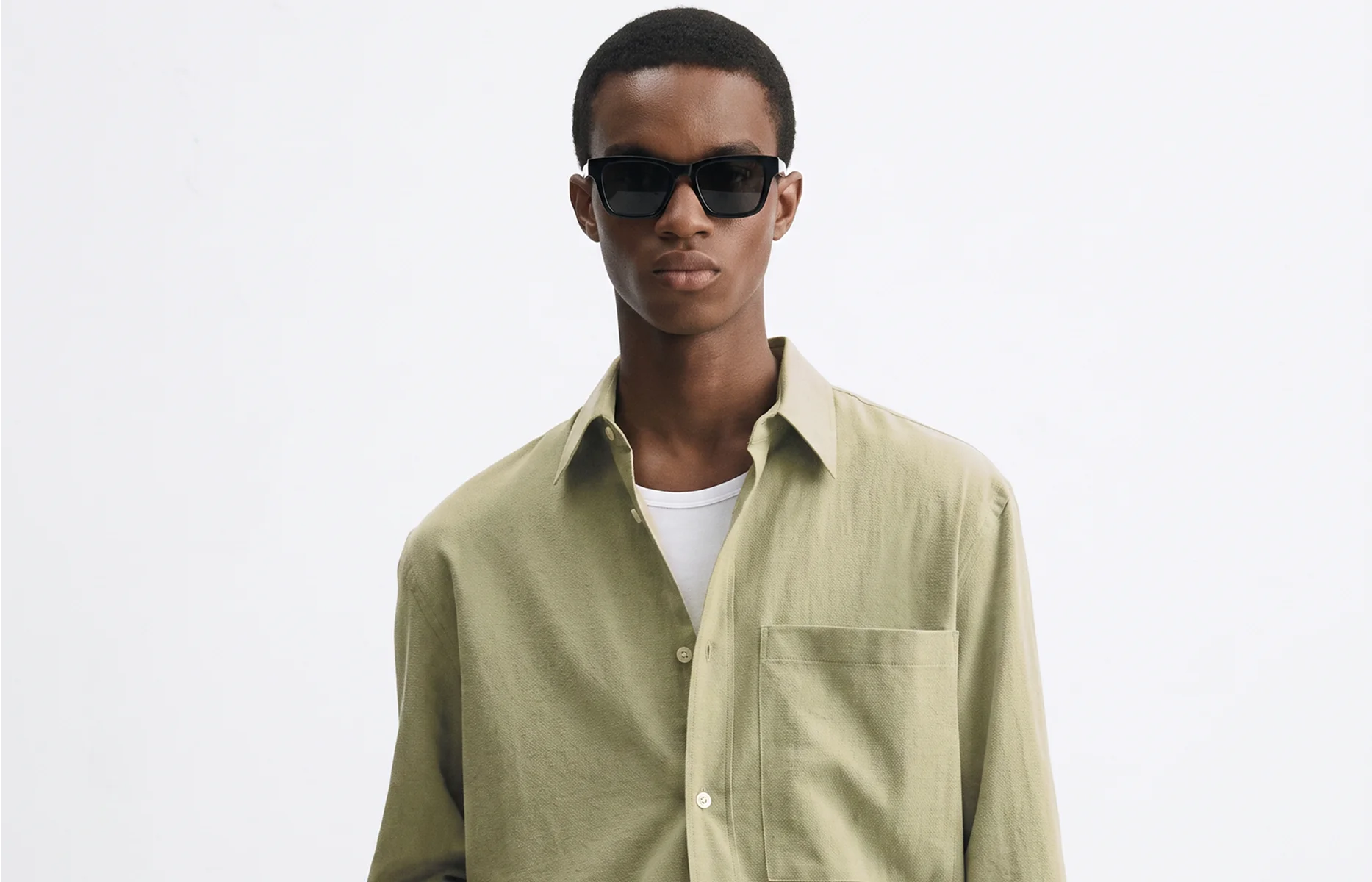
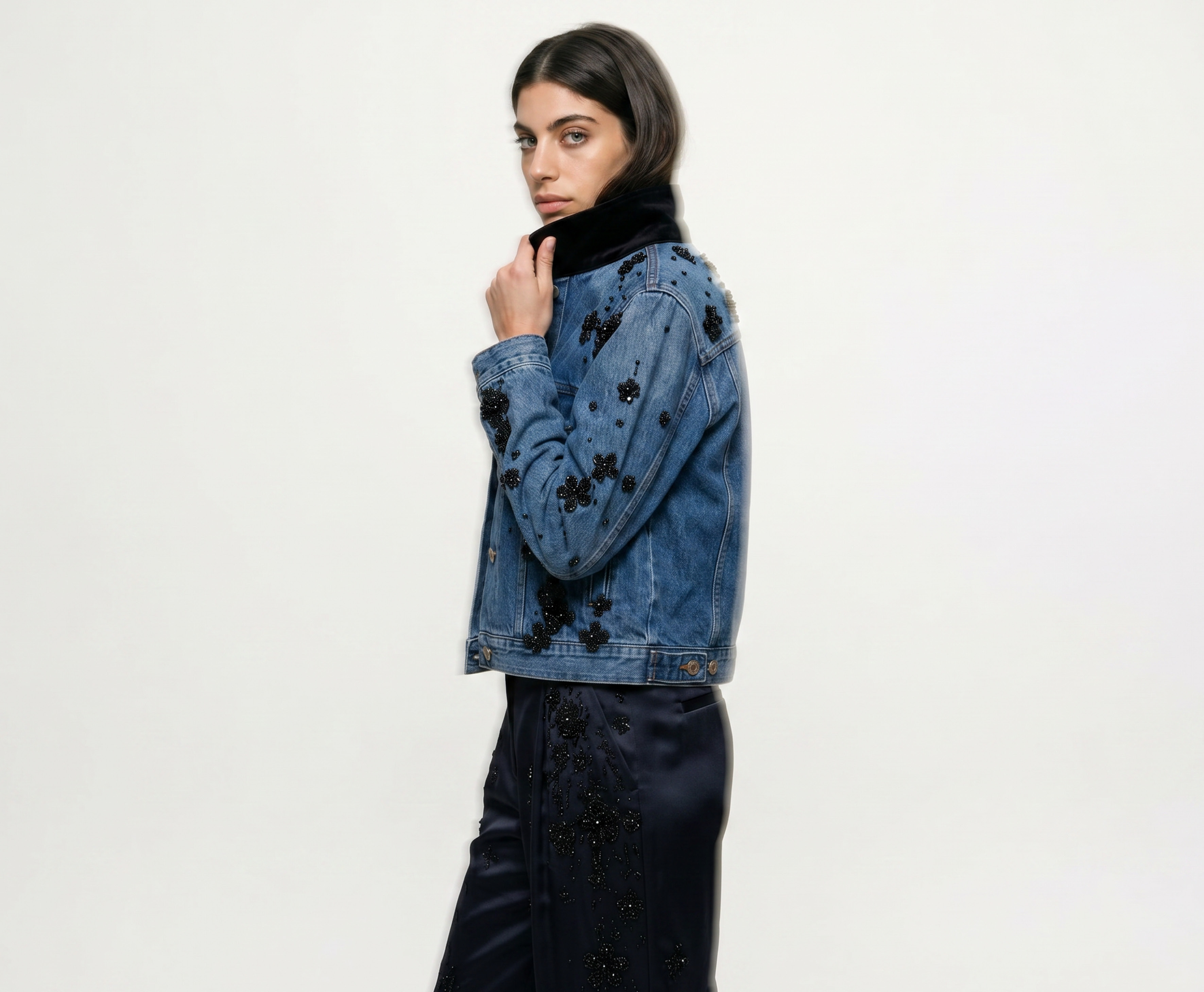
Read that definition against a typical AI on-model image. A garment that exists, worn by an avatar that looks like a real person, in a setting that looks like a real studio shoot. It looks authentic. That is the entire point of the work. And that is what brings it inside the deepfake transparency rule.
The deployer of that content, the brand publishing the image, has to disclose that it has been artificially generated or manipulated.
There is a lighter touch for content that forms part of an evidently artistic, creative, satirical, or fictional work, where disclosure only has to happen in a way that does not spoil the work. A heavily stylised illustration is less likely to trigger the full obligation, because nobody would mistake it for a real photograph. An on-model image built to be indistinguishable from a studio shoot is at the other end of the scale. The middle ground, semi-realistic renders and AI-enhanced photography, is where the legal interpretation gets genuinely difficult, and where most fashion use cases that are not pure illustration will land.
So the short version: AI fashion imagery is not banned, and it is not high-risk. It carries a transparency obligation. You can keep using it. You have to be open about it.
What brands assume, and why it does not hold
Once teams understand there is an obligation, the next instinct is usually to reach for the easiest way to satisfy it. Several of those shortcuts do not work. It is worth knowing why before you build a process around one of them.
"It is covered in our privacy policy." The most common assumption, and the one the guidance has been clearest about. Disclosure buried in terms and conditions, a footer link, or a privacy policy does not meet the standard. The principle is first-exposure disclosure: the person has to be informed at the moment they encounter the content, not several clicks away in a document nobody reads. For an e-commerce brand, that points towards a visible label on or near the image itself, on the product page, rather than a general notice elsewhere on the site.
"Our AI vendor handles all of it." Partly true, and the part that is not true is the part that gets brands in trouble. The Act splits responsibility. The provider of the AI system is responsible for the technical, machine-readable side: marking outputs so that detection tools can identify them as AI-generated. The deployer, your brand, is responsible for the visible, consumer-facing disclosure on the published image. Your vendor cannot do that second part for you, because it depends on how and where you publish. Brands also cannot strip or remove the technical marking the provider applies.
"We sell outside the EU, so this does not reach us." The Act has extraterritorial reach. What matters is not where your company is based but whether the content is published to consumers in the EU. If the same AI-generated imagery appears on an EU-facing site or marketplace, the obligations apply, wherever your headquarters sits. A campaign aimed only at non-EU markets may fall outside scope, but the moment that imagery is visible to an EU shopper, it is in.
"It only applies to obvious fakes." As covered above, the threshold is whether the content could be mistaken for authentic, not whether it depicts anything deceptive. An AI avatar that does not resemble any specific real person can still trigger the obligation, because the test is about authenticity of appearance, not about impersonating a named individual.
Each of these shortcuts fails for the same underlying reason. The law is built around the consumer's experience of the content, not around the brand's internal paperwork.
What compliant disclosure actually looks like
The Act does not mandate exact wording or a single format, which gives brands some flexibility in how they present it. What it requires is that the disclosure is visible and present at the point the consumer first encounters the image.
In practice, the approaches brands are using include a small "AI-generated" badge on the image, a short caption beneath it such as "Images generated with AI", an info icon that reveals a tooltip, or, where every image on a page is AI-generated, a clear banner on the product page. Work is underway at EU level on a common visual label, currently proposed as an "AI" mark, localised into each language. None of these is mandated yet, but they show the direction of travel: a clear, visible signal at first exposure.
Sitting underneath the visible label is a second, invisible layer. This is the machine-readable marking that providers of generative AI systems have to embed, so that detection tools can verify whether an image was AI-generated. The technical mechanism most commonly pointed to for this is C2PA, an open provenance standard that embeds signed metadata into the file recording how the content was made. The Commission's Code of Practice on marking and labelling of AI-generated content, published in June 2026, sets out how providers are expected to approach this marking.
These are two separate obligations, on two different parties, and it is worth holding them apart in your head:
- The visible disclosure to the consumer is the brand's responsibility, and applies from 2 August 2026.
- The machine-readable marking is the AI provider's responsibility. It also applies from 2 August 2026, with a transitional arrangement, provisionally agreed in May 2026 under the proposed Digital Omnibus, giving generative AI systems that were already on the market before that date until 2 December 2026 to bring their marking into line.
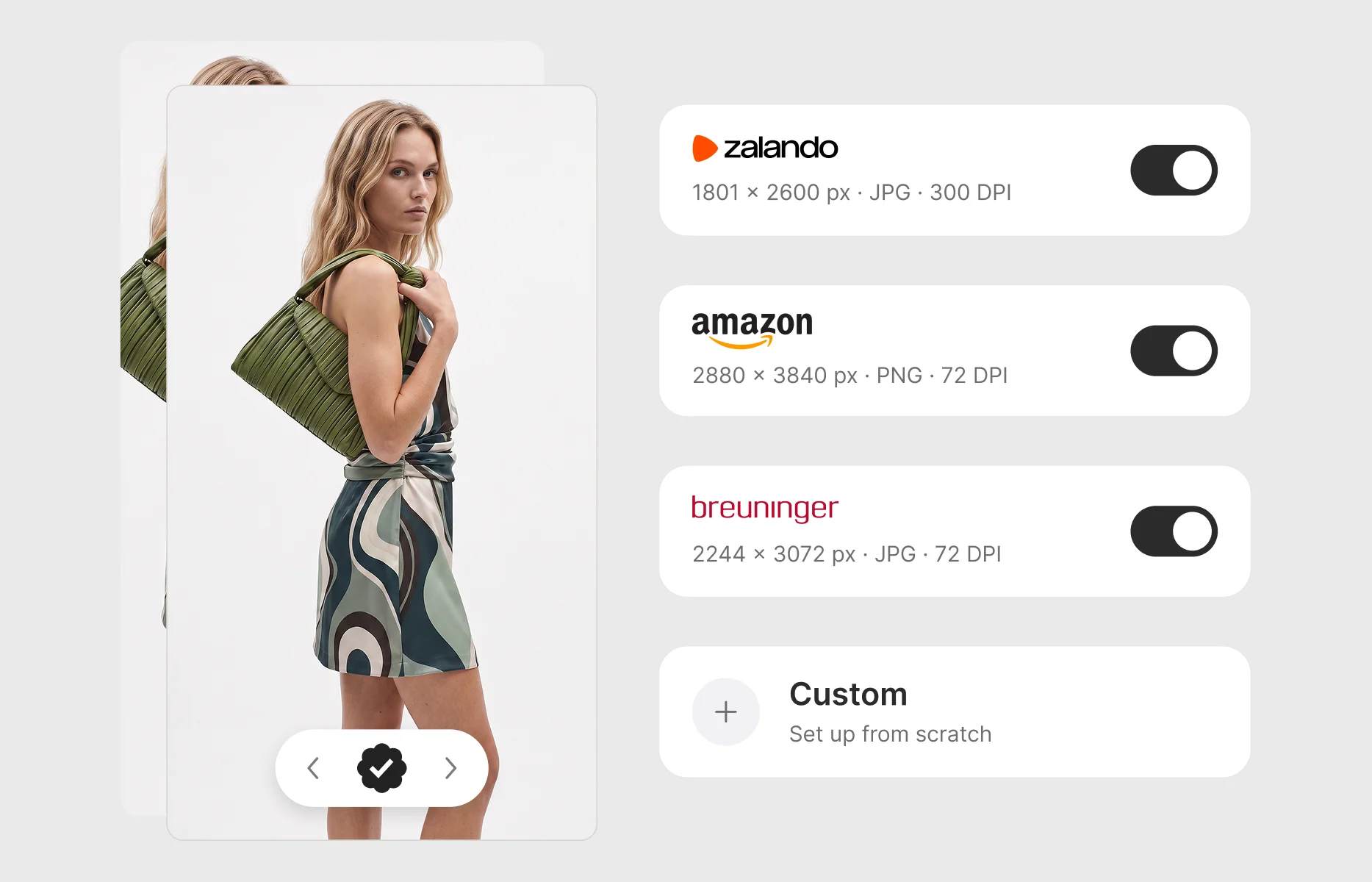
One nuance worth flagging, because it shows why the marking layer is not something to treat casually: a watermark or provenance signal has to survive what brands actually do to imagery. Compressing it, cropping it, and reformatting it for Zalando, Amazon, Instagram, and your own site. How robust that marking is across those transformations is a live technical question, and a fair one to put to any AI imagery vendor.
The grey zones, and why expert interpretation matters
Most of the above is settled enough to plan around. Where it gets harder is the set of cases that do not fall cleanly on either side of the "does it look real" line.
What about an AI-generated lookbook or campaign image rather than a product packshot? What about using a real model's likeness to generate AI variations, the same face in different outfits, which raises not only AI Act questions but potentially personality rights and consent issues as well? What about a brand listing on a third-party marketplace, where it is not obvious whether the brand or the platform carries the disclosure obligation? And how should brands treat the voluntary Code of Practice, which is shaping up to be the practical benchmark regulators use even though signing it is optional?
These are not questions a marketing summary can answer responsibly, and the penalties are not trivial. Breaches of the Article 50 transparency obligations can carry administrative fines of up to 15 million euros or 3% of worldwide annual turnover, whichever is higher. That puts compliance firmly on the agenda of the people who sign off on AI imagery, not just the people who produce it.
A working approach
If you are starting from a standing position, a sensible sequence looks like this. Map where AI-generated imagery appears across your catalogue and channels, so you know the surface area. Decide how visible disclosure will be presented on the product page, at first exposure rather than in a policy document. Ask your AI imagery provider directly how their outputs are marked, whether that marking follows a recognised provenance standard, and how it holds up when images are compressed and reformatted for different platforms. And get a qualified view on the cases that sit in the grey zone for your specific brand.
The brands that treat this as a design input, the same way they treat accessibility, will find it far less painful than the brands that treat it as a last-quarter scramble. Disclosure done well is not only a compliance line item. It is a trust signal to a consumer who increasingly wants to know what they are looking at.
Get the answers from the people who advise on it
We work with fashion brands and retailers producing AI-generated on-model imagery, packshots, and lookbooks at scale, which means the August deadline is a question we field constantly. So rather than answer it second-hand, we brought in the people who interpret this law for a living.
Our Office Hours session on the EU AI Act and AI-generated fashion imagery was moderated by Yannick Kwik and featured Dr. Simon Hembt and Oliver Belitz from Bird & Bird's IP and technology practice. Bird & Bird has published its own analysis of the transparency rules, so this is interpretation from a firm actively advising on the question. A sincere thank you to Simon and Oliver for the time and preparation they put into the session, and for making a genuinely complex regulation digestible, and to everyone who joined live and brought such sharp questions.
The session covered the ground above in more depth and went into the cases that matter most to fashion teams:
- Where AI-generated imagery sits in the risk framework, and what the transparency tier means in practice
- What Article 50 requires, and who carries the obligation: the brand, the AI provider, or both
- What visible consumer disclosure actually looks like, and whether a footer notice is ever enough
- How the technical watermarking layer works, and what to ask your vendor about it
- The nuanced cases: AI avatars, real-model likenesses, editorial lookbooks, and marketplace listings
- The two or three things to do immediately if you have been publishing AI imagery without a compliance process
The audience put their own situations to the speakers directly, and the full Q&A is included in the recording.
Watch the recording on demand here
If August feels far away, it is worth remembering that disclosure is the part of this law closest to your consumers and the quickest to get visibly wrong. An hour with the recording is a good trade against a scramble later.
Quick answers to common questions
Do I need to label AI-generated product images?
If the images would appear authentic to a viewer and are published to consumers in the EU, yes. The brand publishing the image is responsible for a visible disclosure that it has been artificially generated, presented where the consumer first sees the image.
Is a notice in my privacy policy or website footer enough?
No. Disclosure buried in terms and conditions or a footer does not meet the standard. The requirement is disclosure at first exposure, which for e-commerce points to a visible label on or near the image on the product page.
Does the EU AI Act apply to AI avatars that do not look like a real person?
The test is whether the content could be mistaken for authentic, not whether it resembles a specific named individual. An AI avatar built to look like a real photograph can fall within the disclosure obligation even if it does not depict anyone real.
Who is responsible, my brand or my AI imagery provider?
Both, for different things. The AI provider is responsible for the machine-readable marking of outputs. The brand deploying the imagery is responsible for the visible consumer-facing disclosure. Brands also cannot remove the provider's marking.
Does this apply if my brand is based outside the EU?
It can. The Act applies where content is published to consumers in the EU, regardless of where the company is headquartered. Imagery aimed only at non-EU markets may sit outside scope, but the same imagery on an EU-facing site is covered.
When exactly does this come into effect?
The visible consumer disclosure obligation applies from 2 August 2026. The machine-readable marking obligation also applies from that date, with a transitional period to 2 December 2026 for generative AI systems that were already on the market before 2 August 2026.
What are the penalties for getting it wrong?
Breaches of the Article 50 transparency obligations can carry fines of up to 15 million euros or 3% of worldwide annual turnover, whichever is higher.
Sources
The legal points above are linked inline to their primary or official source. They are listed again here for reference. All are official EU sources, except the C2PA reference, which is the standards body that maintains the provenance standard.
- The EU AI Act, Regulation (EU) 2024/1689, full official text, covering Article 3 (definitions), Article 50 (transparency obligations), and Article 99 (penalties). EUR-Lex
- Article 50, transparency obligations for providers and deployers of certain AI systems. European Commission AI Act Service Desk
- Draft Guidelines on the implementation of the Article 50 transparency obligations. European Commission
- Code of Practice on marking and labelling of AI-generated content. European Commission
- Navigating the AI Act, application timeline. European Commission
- C2PA (Coalition for Content Provenance and Authenticity), which maintains the Content Credentials provenance standard
- The 2 December 2026 transitional period derives from the provisional agreement on the Digital Omnibus on AI (May 2026), not yet reflected in the consolidated regulation, so treat it as provisional. Commission overview

.webp)












.webp)