.webp)
On-model imagery for childrenswear: how to cover your whole kidswear catalogue without the shoot
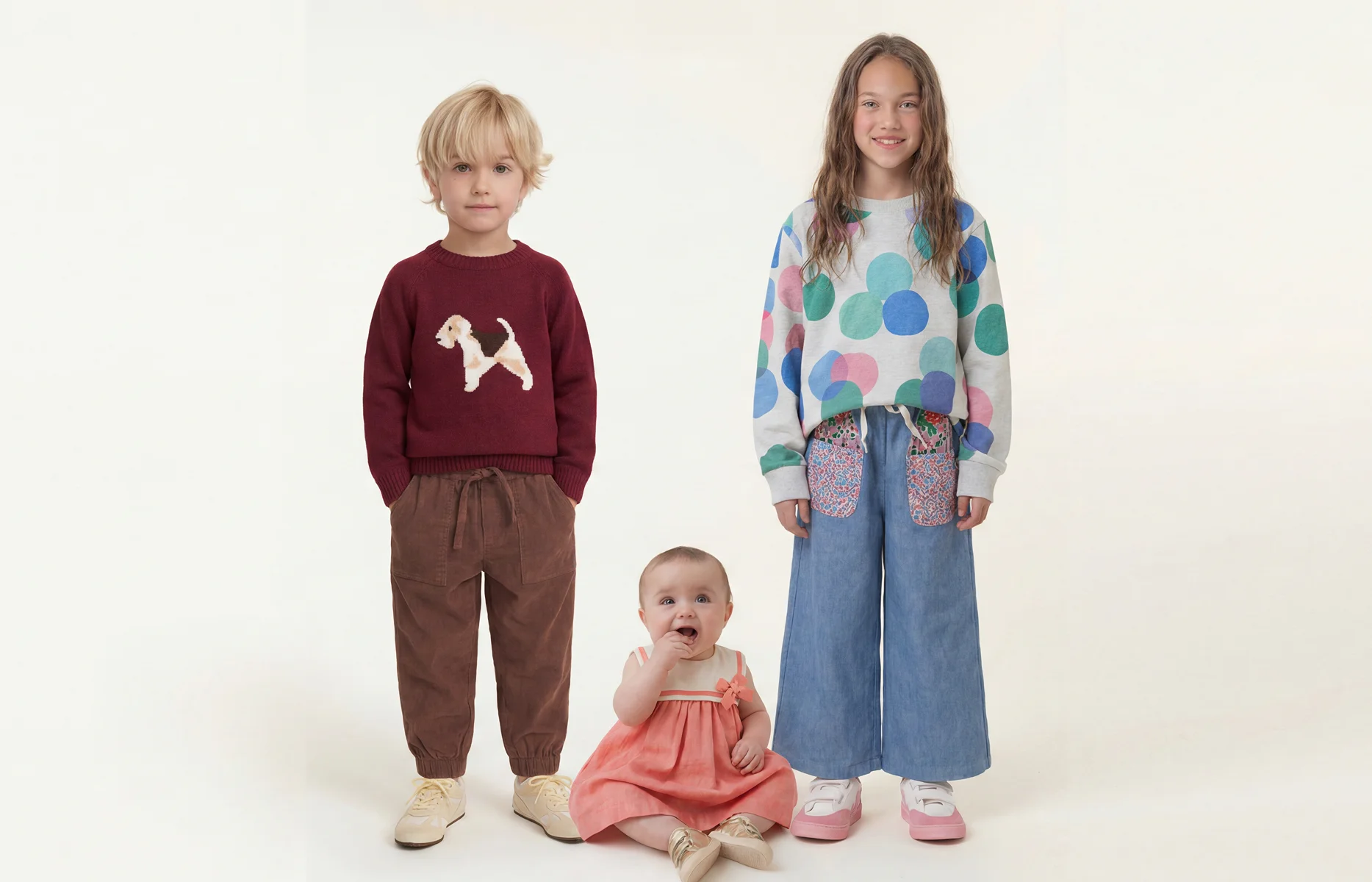
Here is a question most childrenswear teams already know the uncomfortable answer to: what share of your catalogue actually goes live with on-model imagery, and how much of it sits on a flat-lay or a ghost mannequin until the next shoot, if it ever gets one.
For most brands the honest split is roughly half and half. The hero styles get the model treatment. The long tail launches flat. And babywear, more often than not, never gets shot on a real baby at all.
It is not a planning failure. Kidswear is simply the hardest category in fashion to photograph on model, for reasons that have nothing to do with how good your studio is.
.png)
The problem: weekly drops, quarterly shoots
The rhythm of a children's clothing business and the rhythm of a child shoot do not match.
Most kids' clothing brands drop new product almost every week. Newness is the business. But the shoot happens only a handful of times a year, because a children's shoot is a logistical event, not a quick studio booking. So a steady stream of new arrivals lands on the site, and a large portion of it sits on flat-lays for weeks or months, waiting for a shoot day that is already overbooked with the next season's priorities.
The result is a catalogue that looks inconsistent to the one person who matters: the parent deciding whether to buy.
Why children's clothing is so hard to shoot on model
Adult on-model shoots are expensive. Children's shoots are constrained, which is a different and harder problem. You cannot solve a constraint by spending more.
The legal reality. Children working on a shoot are not booked like adult models. In the UK they typically need a performance licence from the local authority and a registered chaperone, and there are statutory limits on how long a child can work in a day, scaled by age. The usable shoot window is short before the day even begins.
The sizing problem. This is the one kidswear teams feel most. The same dress on a five-year-old and on a nine-year-old reads as two different products. Fit, proportion, and how the garment falls all change with age. Most brands only have the time and budget to shoot one age range per style, so the rest of the size ladder is left to the parent's imagination.
The sample timing problem. Samples arrive late, in one size, and a child has usually outgrown last season's fit by the time the next shoot comes round. Unlike an adult range, you cannot simply rebook the same model in three months and expect continuity.
The babywear problem. Shooting infants on model is its own undertaking, dependent on a baby who is the right size, available, settled, and accompanied by a parent who agrees to the day and the rate. It is so difficult that a great deal of baby clothing quietly never gets shot on a baby, and launches on a flat-lay instead.
Stack these together and the picture is clear. A childrenswear catalogue generates more SKUs, more colourways, and faster turnover than the shoot schedule can ever keep pace with, under tighter rules than any other category.
What brands try, and why it falls short
The usual responses each solve part of the problem and leave the rest open.
More shoot days. The obvious lever, and the one that runs out fastest. More days mean more licences, more chaperones, more cost, and more scheduling around children who can only work limited hours. It does not scale to the SKU count, so the long tail still gets cut.
Flat-lays and ghost mannequins for the rest. This keeps the site populated, but flat product is exactly what under-converts. Shoppers weight on-figure imagery heavily when they are deciding whether something will suit them. Research from the Baymard Institute found that most users rely on product images for their first impression and, without an image of the garment on a model, are left to imagine how it will look when worn. When those images are flat, a parent is guessing.
Generic AI image tools. A wave of self-serve tools now offer to drop kids' clothes onto an AI-generated child in minutes. The speed is real. But the output tends to be off-brand and inconsistent from one generation to the next, which is the opposite of what a coherent catalogue needs, and for a children's category it raises trust and governance questions that a cheap, ungoverned generator is not built to answer.
Each of these treats the symptom. None of them closes the gap between weekly drops and a few shoot days a year.
The right approach: brand-calibrated, synthetic, and governed
The way to close the coverage gap in kidswear is not to shoot more or to generate faster. It is to produce on-model imagery from the inputs you already have, calibrated to your brand, consistent across every SKU, and built on a foundation you can stand behind in a children's category.
Three things have to be true at once.
It has to be brand-calibrated, so a 200-style range looks like one collection rather than 200 unrelated images, with your lighting, your styling, and your shot list applied the same way every time.
It has to be scalable to the catalogue, so the long tail and the babywear get the same standard as the hero styles, not whatever was left at the end of the shoot day.
And it has to be governed and transparent, because this is children's clothing. That means AI avatars that are fully synthetic and do not depict real, identifiable children, clear labelling and provenance on the imagery, alignment with emerging disclosure rules for synthetic imagery, and representation handled deliberately and responsibly rather than as a careless toggle. For a parent-facing category, trust is not a compliance afterthought. It is the buying criterion.
How Graswald AI closes the childrenswear coverage gap
Graswald AI is the AI production studio for fashion enterprises, and childrenswear is where the coverage gap it was built to close is at its sharpest.
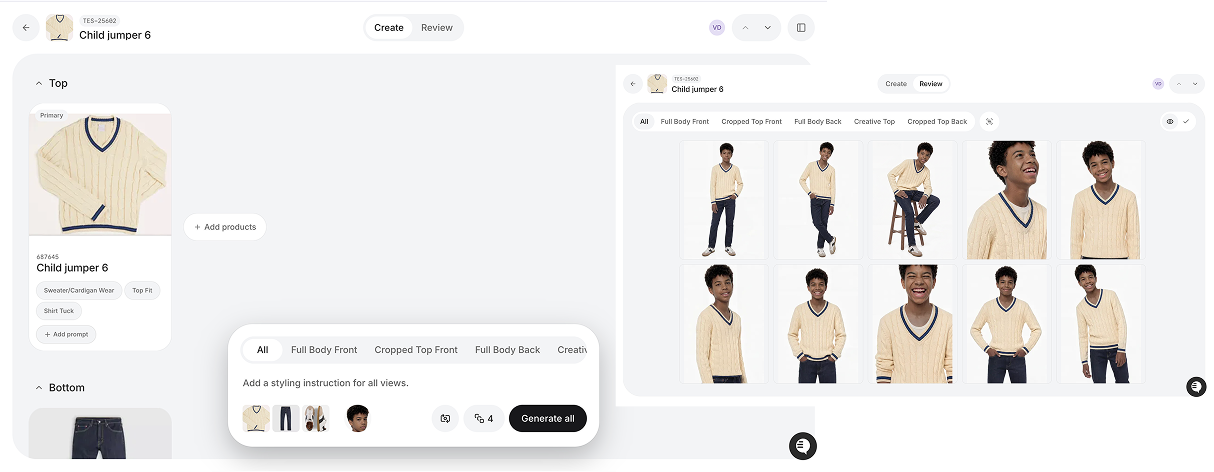
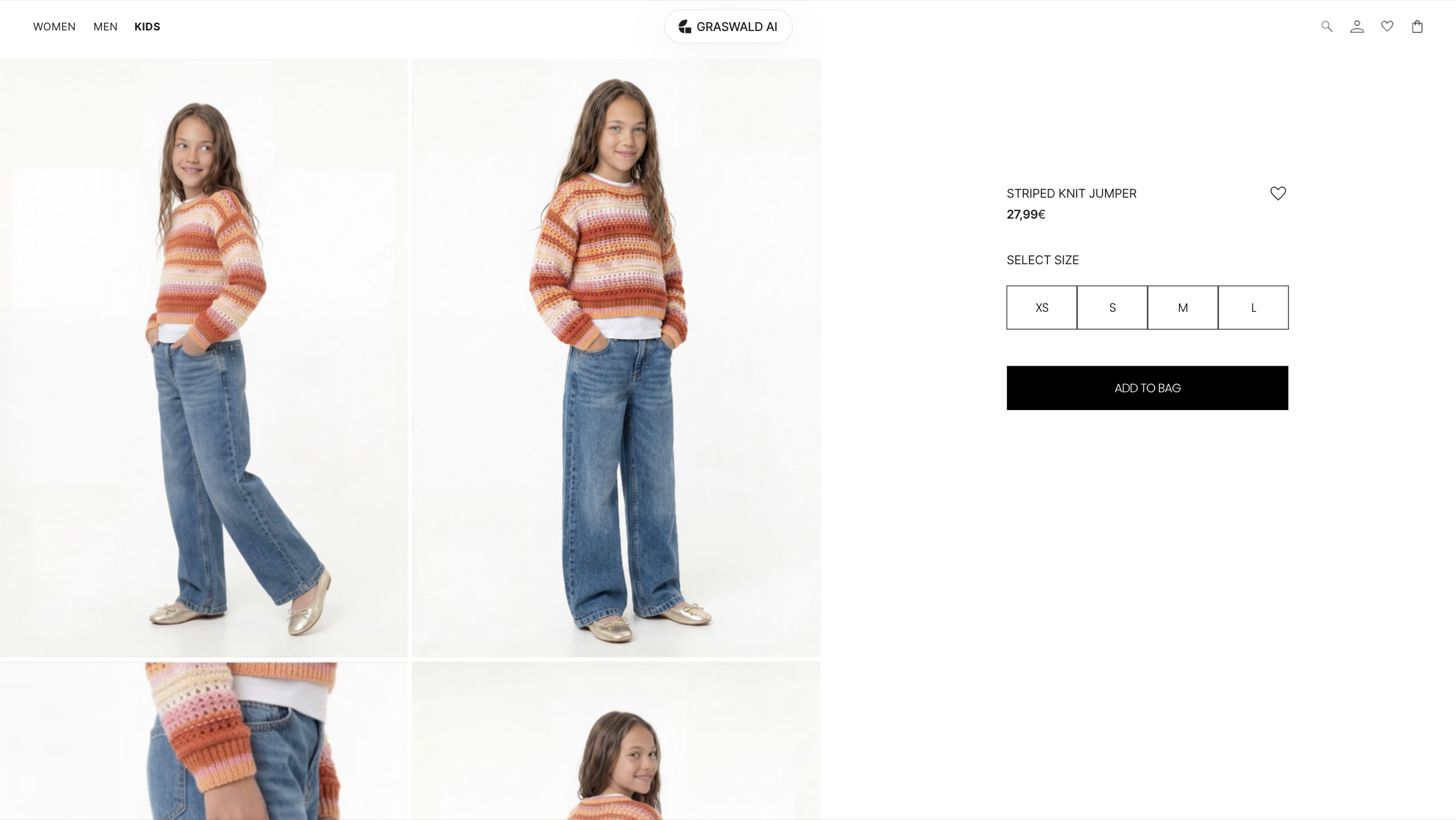
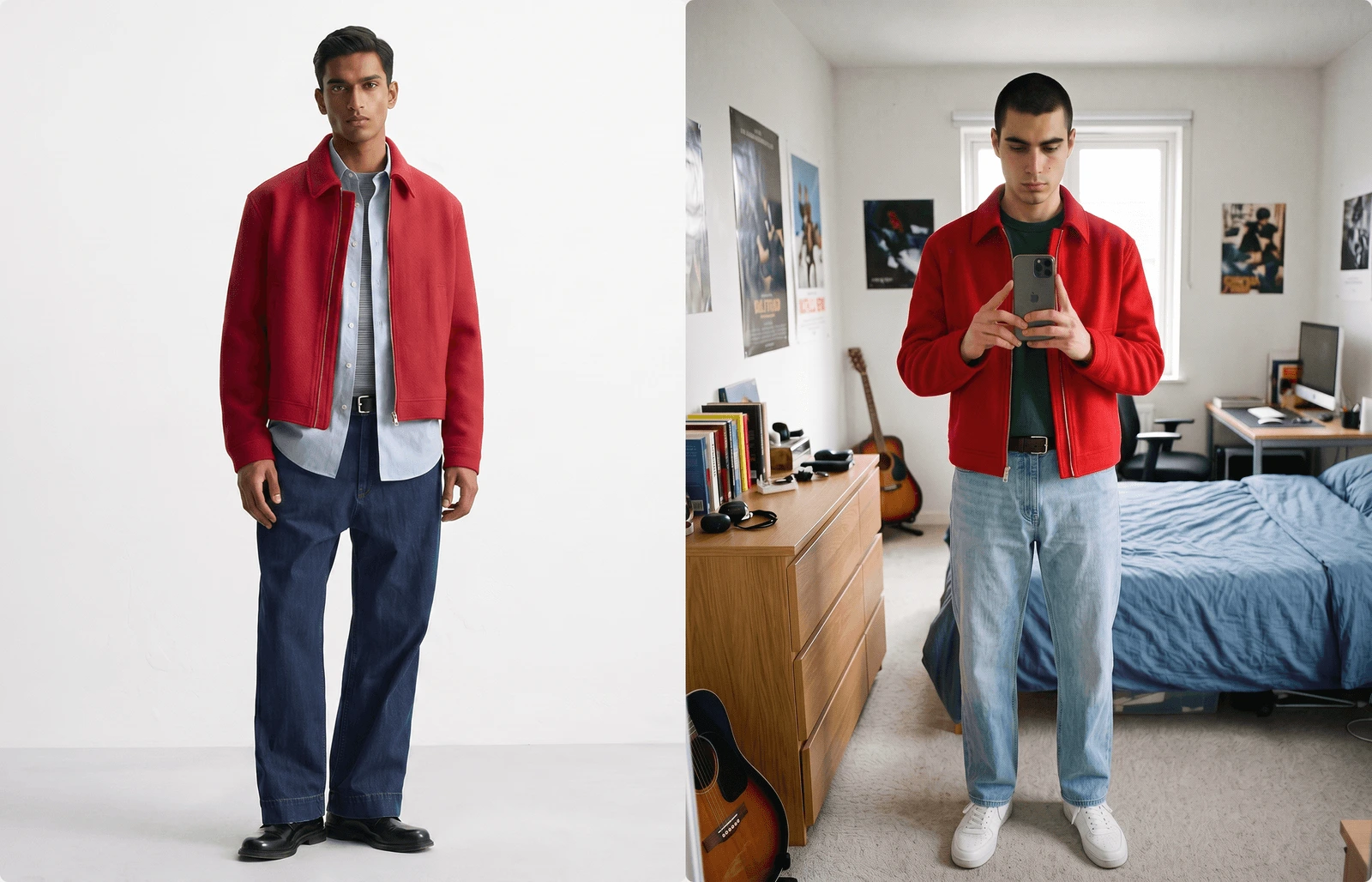
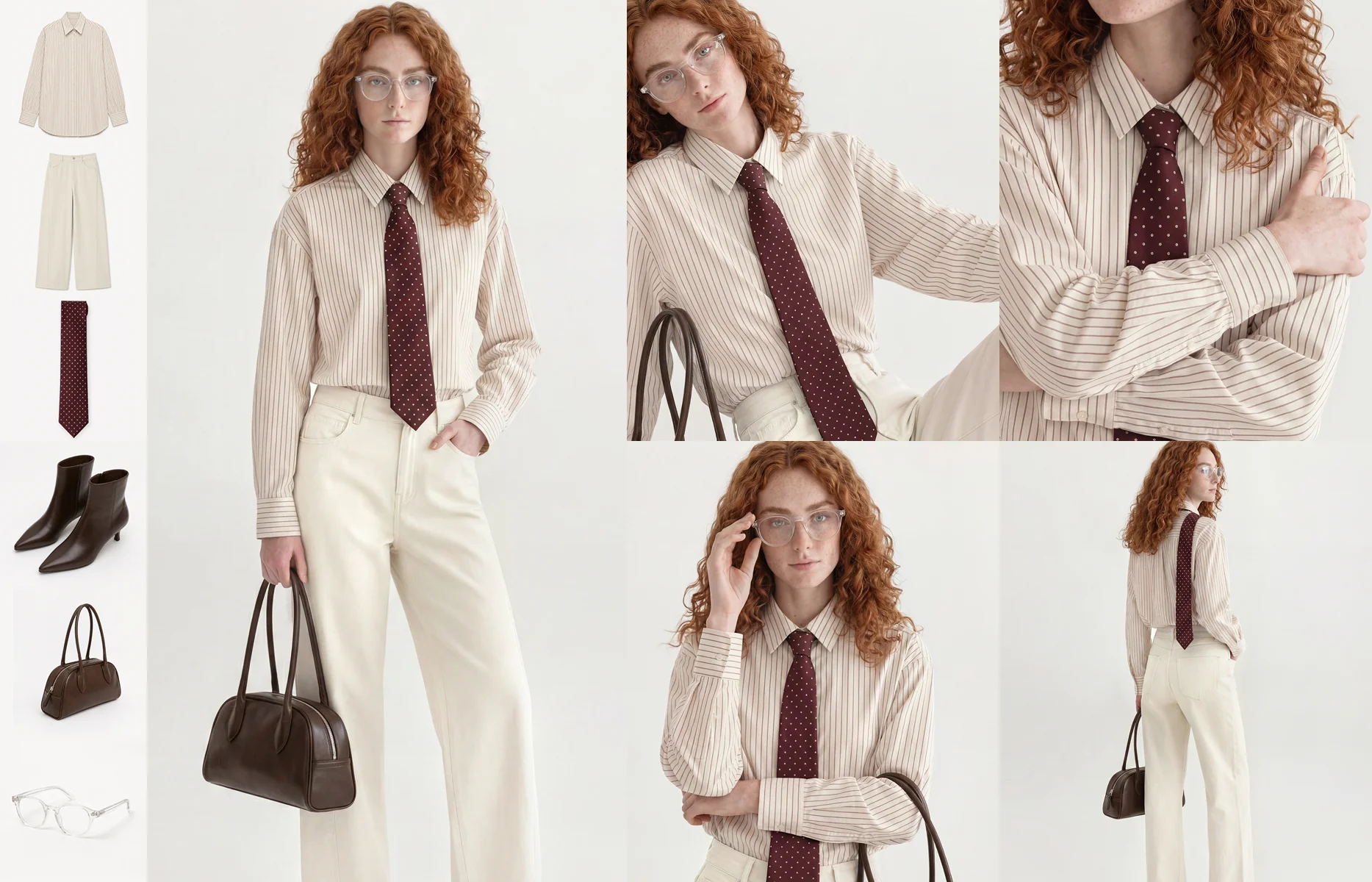
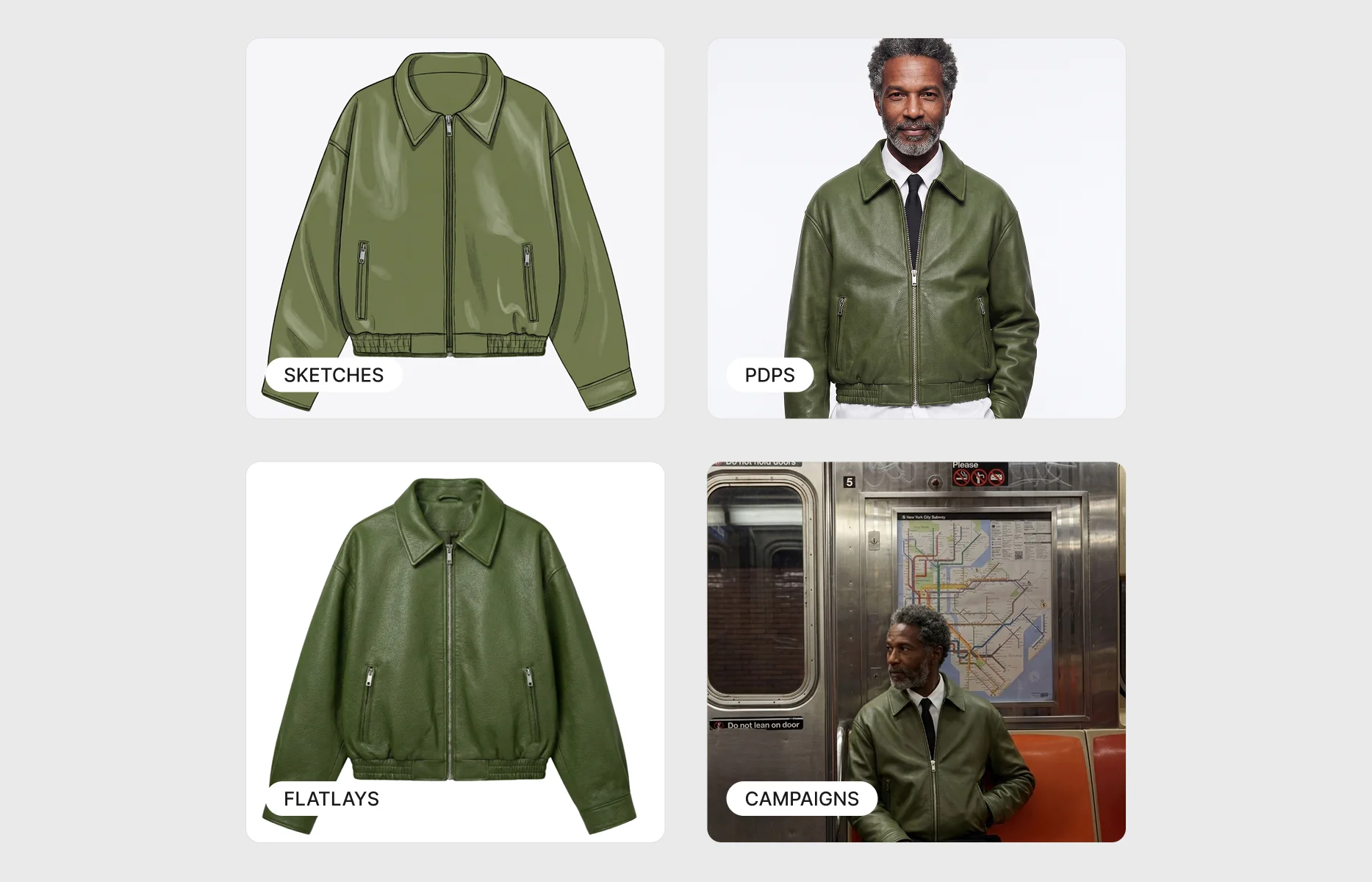
The workflow starts with what you already have. A flat-lay, a packshot, or a tech pack becomes the input. Graswald AI generates studio-quality on-model imagery of the garment on a brand-calibrated AI avatar, using the poses, cropping, lighting, and styling you have pre-set, so the output matches your existing site without manual art direction on every image. Production runs as a managed workflow rather than a string of one-off generations, with review and approval built in, so your team keeps creative control and signs off before anything goes live.
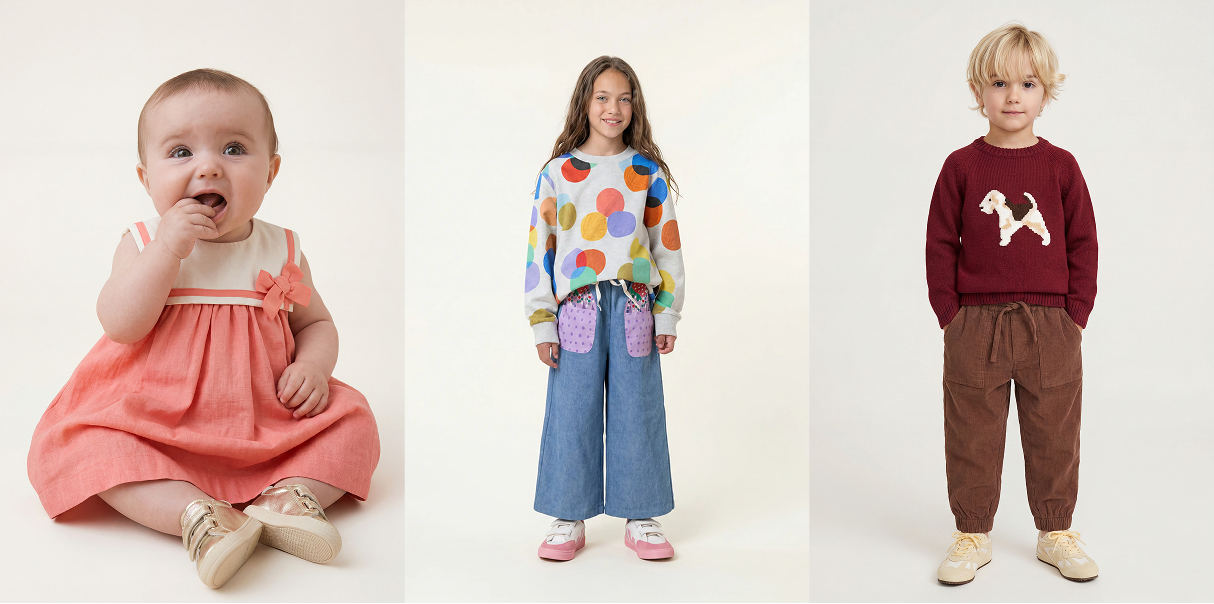
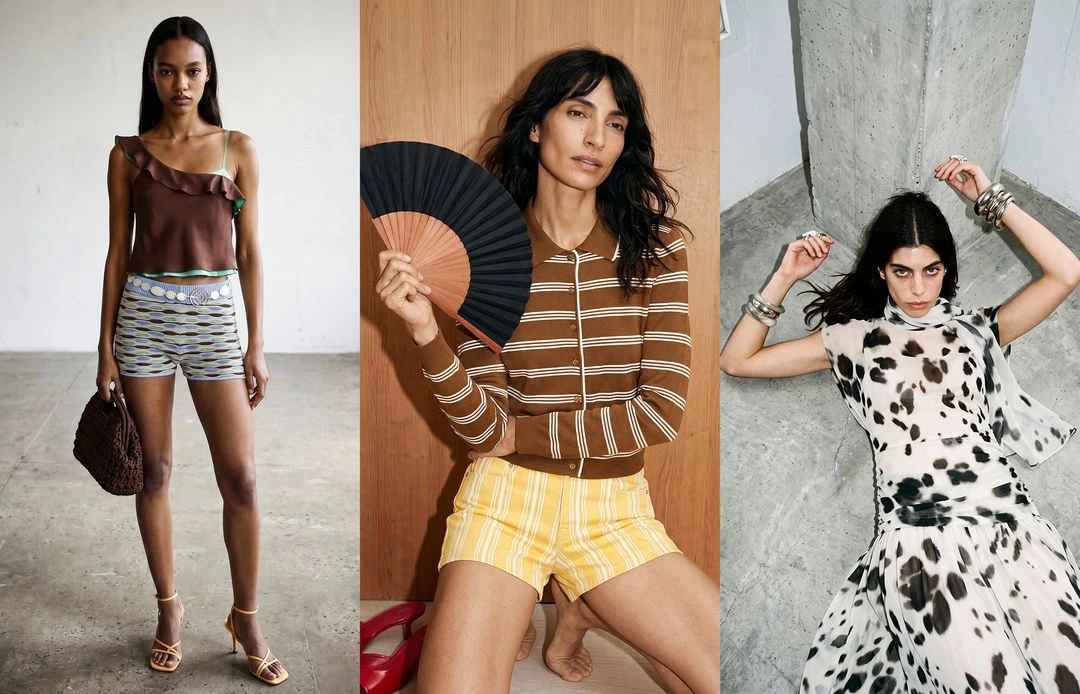
Because the avatars are synthetic, the constraints that make children's shoots so hard simply fall away. There are no performance licences, no chaperones, no limited working hours, no waiting for a sample to arrive in the right size, and no dependence on a settled baby on the day. The same garment can be shown across the full age ladder, so the five-year-old and the nine-year-old versions of that dress both get represented, and across a genuinely diverse and responsibly chosen range of avatars.
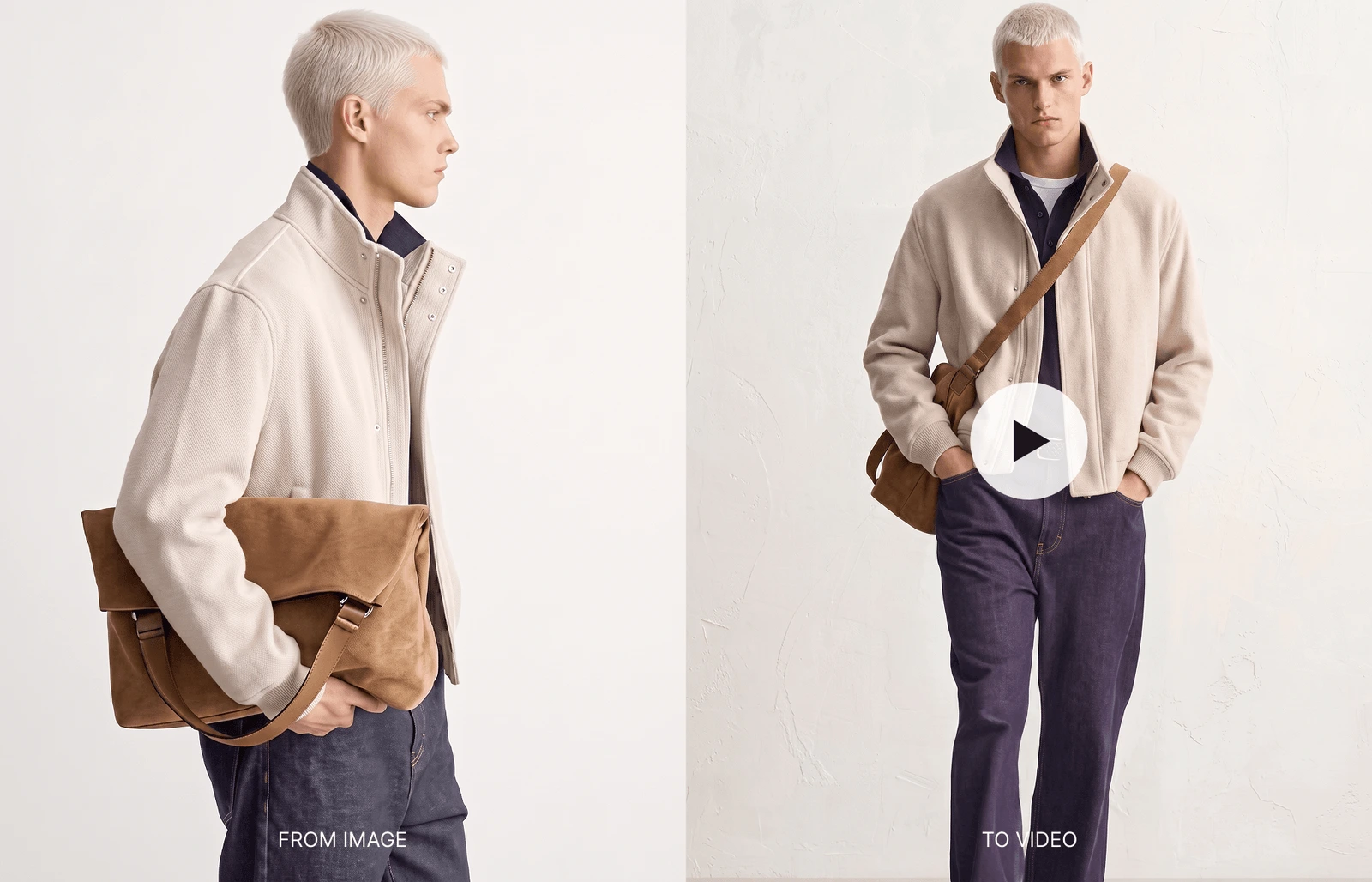
To bring the page to life, the static on-model images can be extended into short, on-brand video for PDPs and social, which is often what shows a parent how a garment actually moves on an active child.
The avatars never depict real children. Provenance and AI labelling travel with the imagery, and the approach is designed to align with disclosure requirements rather than work around them. That is the part that matters most in this category, and it is the part generic tools skip.
What this does for conversion
The commercial case for kidswear is stronger than the general one, because the gap is wider to begin with.
The long tail finally goes on model. The styles that were launching flat are usually the ones quietly under-converting, because the hero styles were already well shot. Giving the rest of the catalogue proper on-model imagery is where the measurable lift tends to sit.
Fit clarity reduces guesswork, and guesswork drives returns. When a brand only shoots one age range, parents buying children's clothing for a different age are estimating how the garment will actually look and fit. That guessing is a known driver of size-related returns, and returns are a direct margin cost in childrenswear, where sizing is the whole ballgame. Showing the same product across ages, with consistent pose and scale, gives parents a clearer read on fit before they buy.
Speed to PDP captures the windows that matter. Children's demand spikes hard around back-to-school and the holidays. When every SKU can launch on model on day one instead of waiting for a reshoot, more of the catalogue is converting during the peak window, at full margin, before markdowns.
Localisation becomes practical. Back-to-school lands at different times in different markets, and seasons are inverted between hemispheres, so the same garment needs different timing and framing by region. Producing market-specific variants from one input lets a brand launch each market on its own calendar, and show its range on avatars suited to each market, rather than forcing one global shoot to serve everyone.
Testing variants stops being a luxury. Once imagery is no longer gated by shoot days, A/B testing poses, framing, and styling across the catalogue becomes realistic, which is normally out of reach for a kids' range on a fixed shoot budget.
The throughline is simple. Creativity and cost have always pulled in opposite directions in childrenswear. Closing the coverage gap means a brand can do more, across more of the catalogue, more often, without the shoot-day constraint deciding what gets its best imagery and what does not.
Frequently asked questions
How do you photograph children's clothing for ecommerce without booking child models? On-model imagery can now be generated from inputs a brand already has, such as flat-lays, packshots, or tech packs, by rendering the garment on a brand-calibrated, fully synthetic AI avatar. This produces studio-quality on-model imagery across the full kidswear catalogue without a child shoot, while keeping the brand's lighting, styling, and shot list consistent.
Is it safe and appropriate to use AI-generated child imagery in childrenswear marketing? It depends entirely on how it is done. The responsible approach uses fully synthetic avatars that do not depict real, identifiable children, with clear AI labelling and provenance, governed production, and representation handled deliberately. Generic, ungoverned generators are not built for this. A children's category should be held to a higher standard, not a lower one.
Can AI show the same garment across different ages and sizes? Yes. One input can be rendered across the age ladder, so a style is represented on the range of ages it is actually sold to, rather than a single age range that leaves parents guessing about the rest.
Does on-model imagery reduce returns for kidswear? Clearer fit information helps shoppers judge proportion and size before buying, which is a known factor in size-related returns. Showing a garment on model, across ages, with consistent scale gives parents a better read on fit than a flat-lay can.
How is this different from generic AI fashion image tools? The difference is brand calibration, an enterprise production workflow with review and approval, and a governed, transparent approach to synthetic imagery. The output looks like one coherent collection across thousands of SKUs, rather than a series of inconsistent one-off generations.
.webp)




-p-1600.webp)

.webp)