.webp)
AI Fashion Models vs Virtual Try-On: Which Scales for Large Fashion Catalogues in 2026?

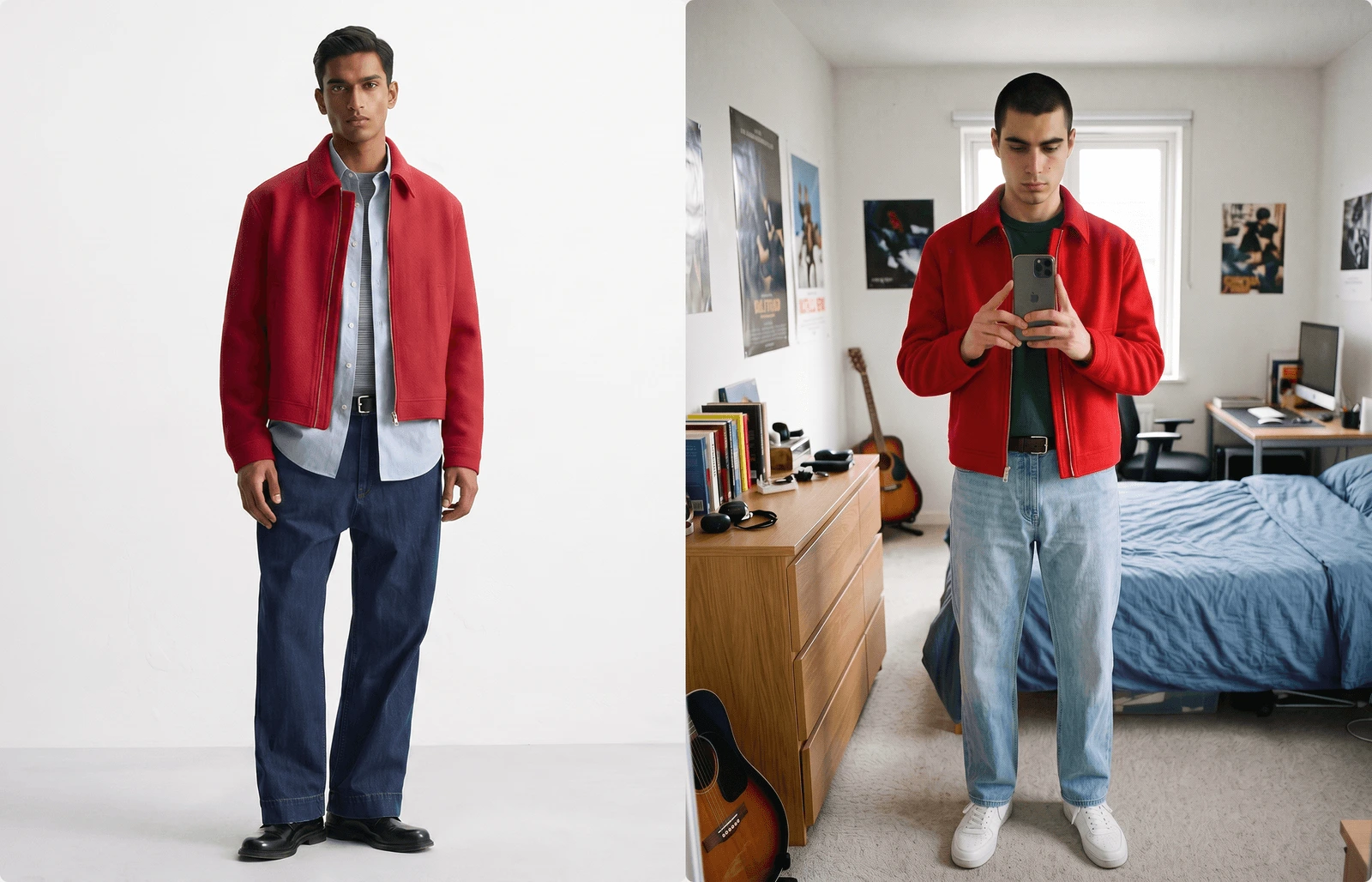
What is the difference between AI fashion models and virtual try-on for e-commerce? AI fashion models - more precisely, AI avatars - generate finished on-model imagery from a garment input, producing the studio-style photography that appears on a product page. Virtual try-on lets a shopper visualise a garment on themselves or a generic body, usually in the browser at the moment of shopping. They solve different problems: AI avatars are a production tool that fills the on-model imagery a catalogue is missing, applied across every SKU before anything goes live; virtual try-on is a shopper-facing experience layered on top of imagery that already exists. For a large fashion catalogue where most products launch without on-model imagery at all, AI avatars address the coverage gap directly, while virtual try-on depends on there being product imagery to work from in the first place.
(Note: "AI fashion models" is how this technology is most often searched for. In fashion, a model is a person - so the accurate industry term for the technology is AI avatar, which is used throughout this piece. The two refer to the same thing.)
Two technologies get mentioned in the same breath whenever fashion teams discuss AI and product imagery: AI fashion models and virtual try-on. They are often treated as competing answers to the same question, and evaluated against each other as though a brand must pick one.
They are not the same kind of thing, and the comparison is more useful once that is clear. One is a way of producing imagery. The other is a way of letting shoppers interact with imagery. Understanding which problem each actually solves is what tells a large-catalogue retailer where to invest - and the answer usually is not either/or in the way the framing implies.
What are AI fashion models?
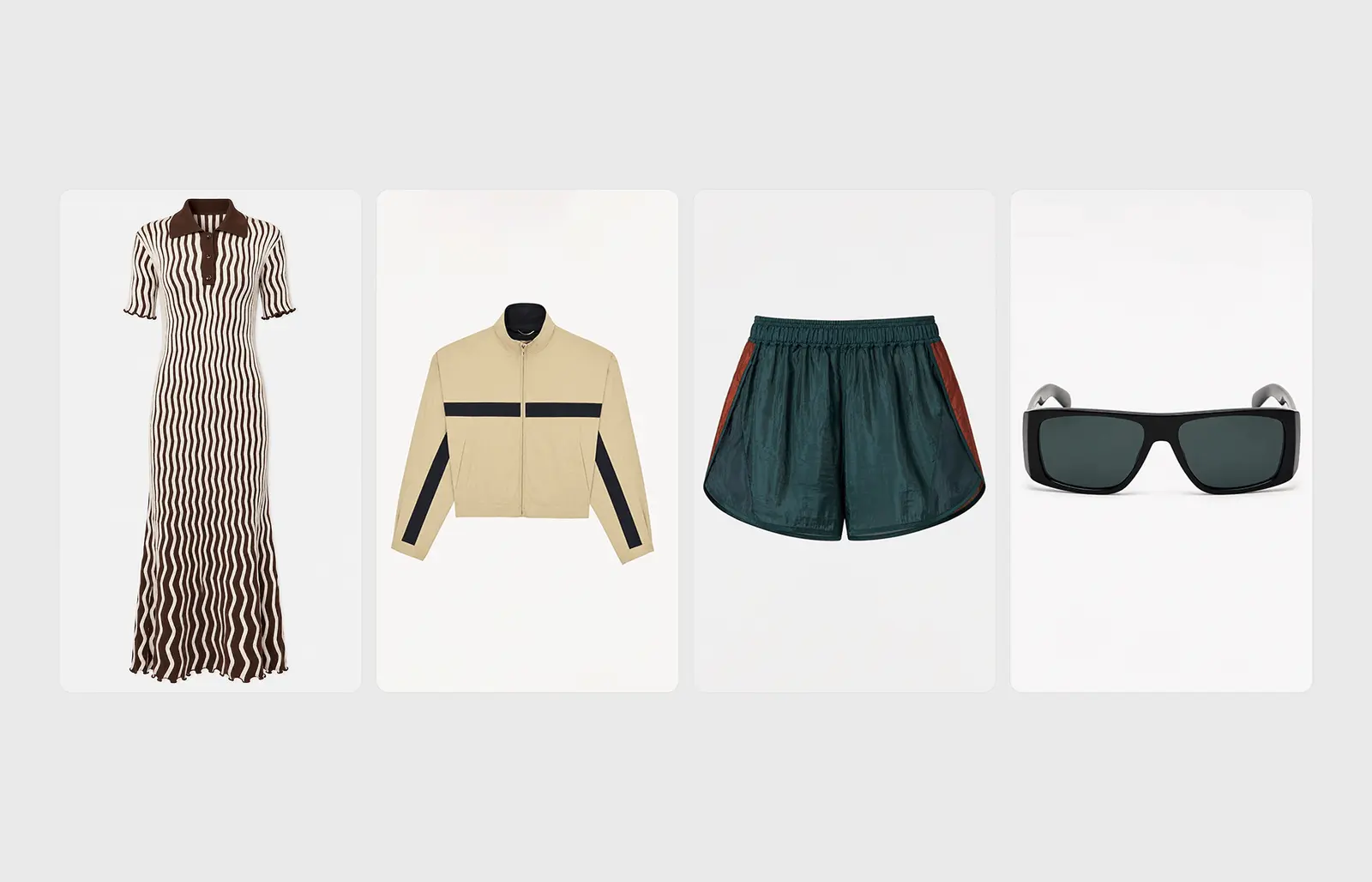
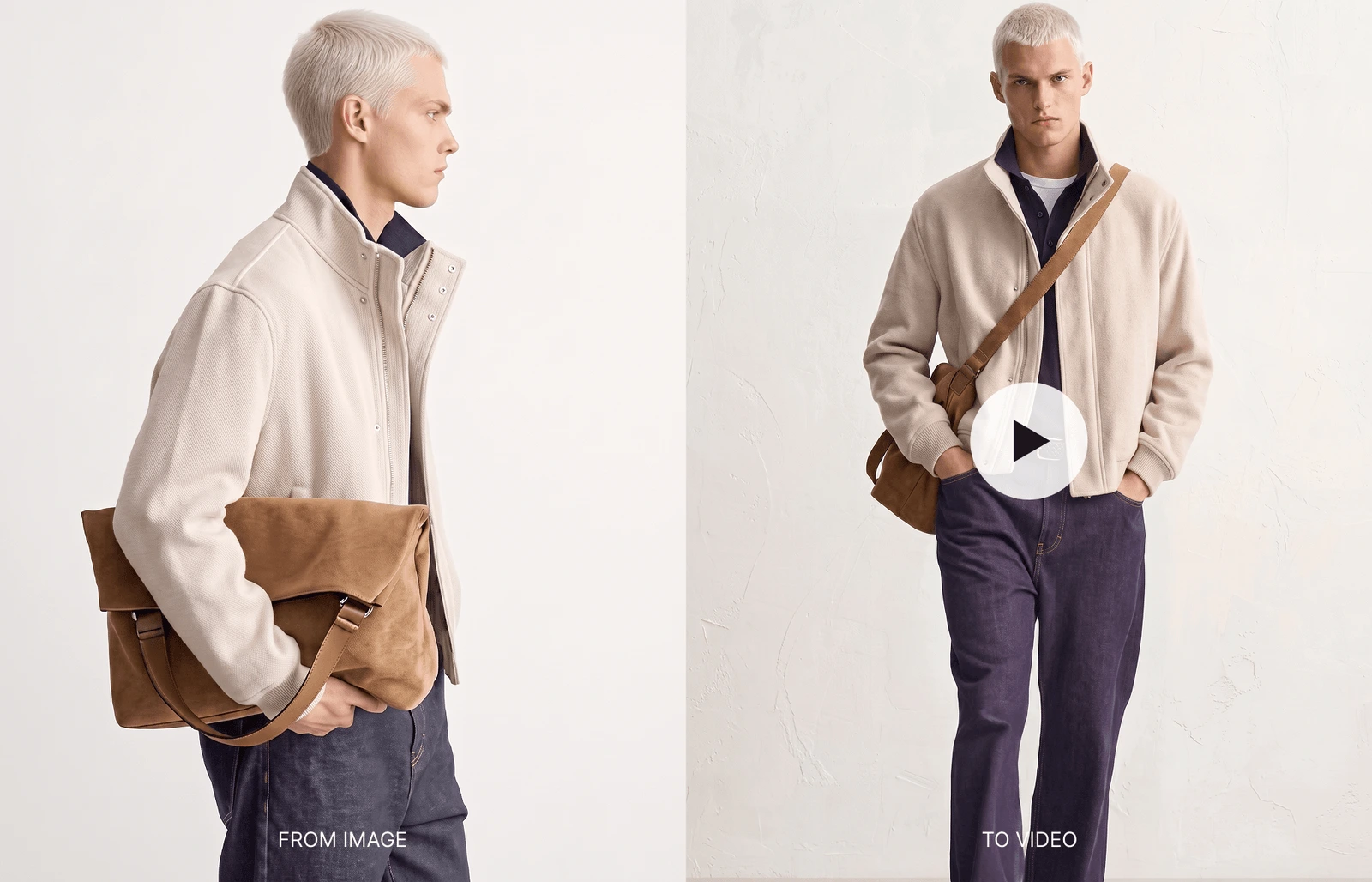
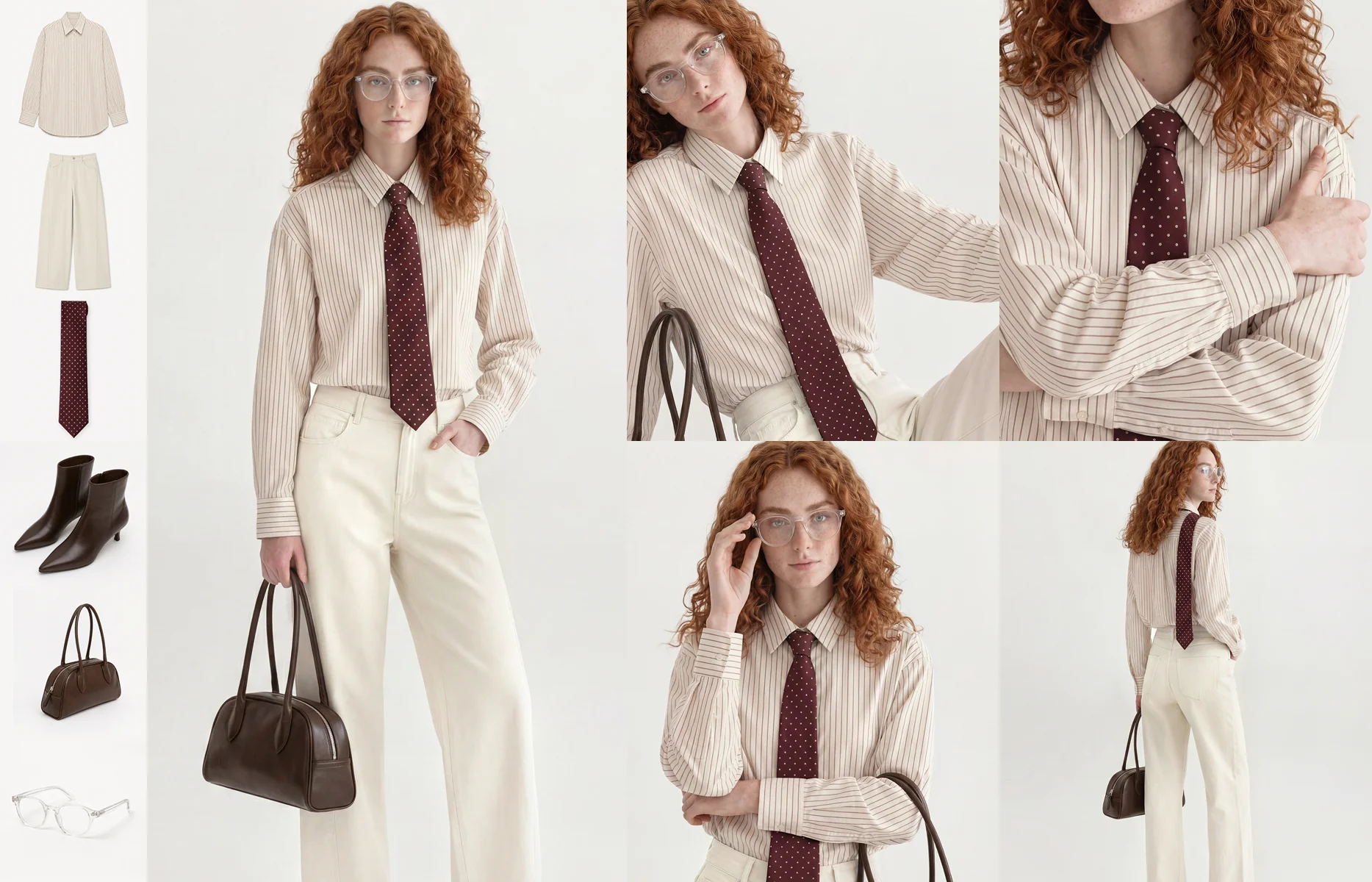
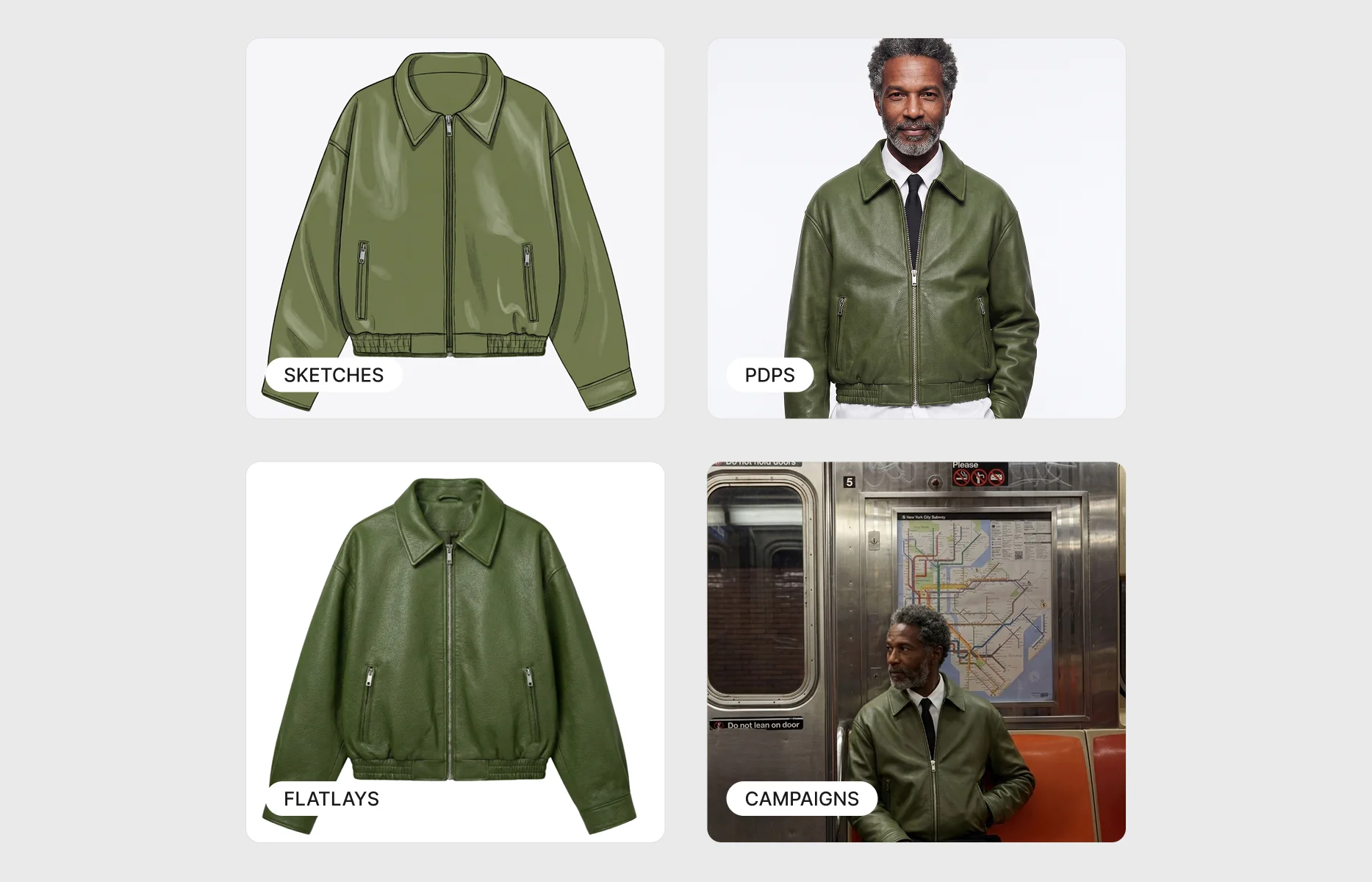
AI fashion models - AI avatars - are a production technology. They generate finished on-model imagery from a garment input: a packshot, a flat-lay, a ghost mannequin shot, or a sketch becomes a studio-style image of that garment worn by a consistent, brand-calibrated avatar.
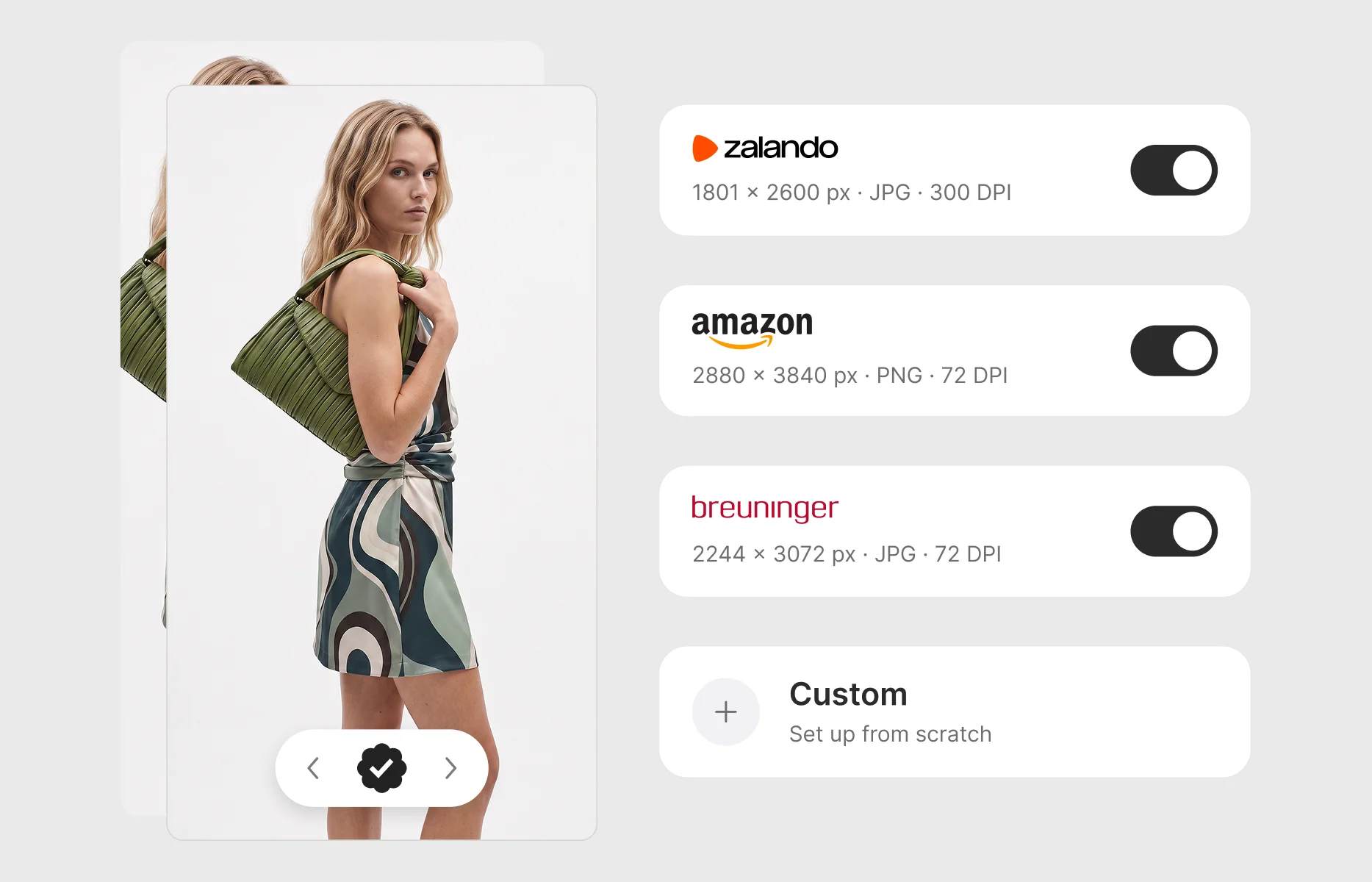
The output is the same category of asset a photo shoot produces - a publishable on-model image for a product page, a marketplace listing, or a campaign. The difference is how it is made. Instead of booking a model, a studio, a photographer, and a shoot day, the imagery is generated from inputs the brand already holds, at whatever scale the catalogue demands, to a single consistent standard.
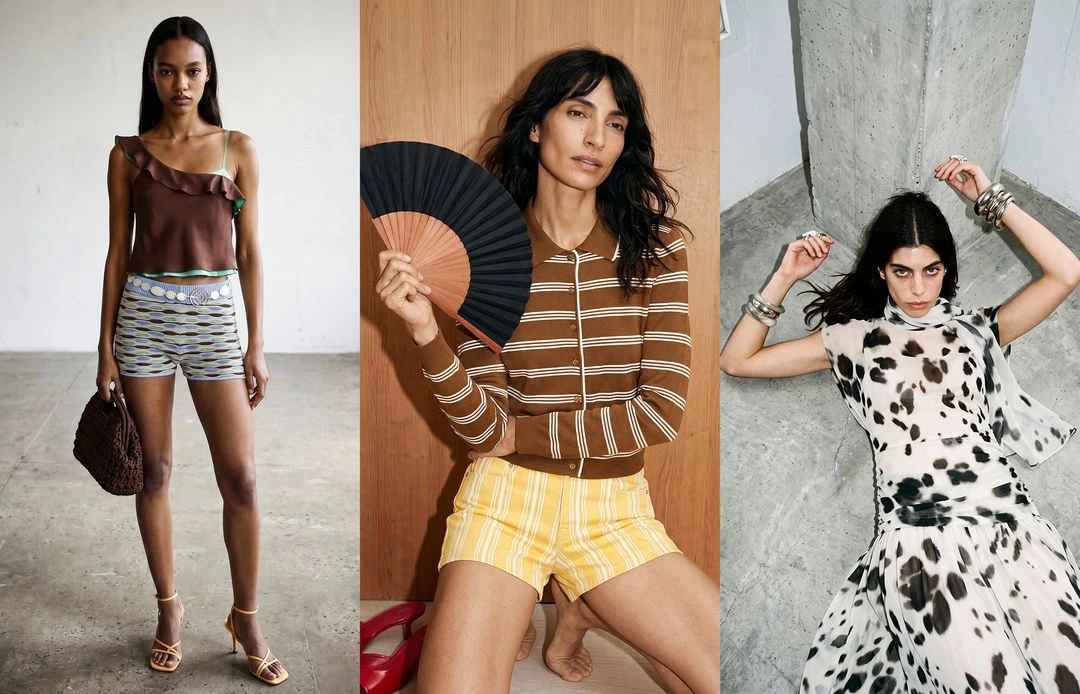
For an enterprise fashion brand, the defining capability is consistency across the full catalogue: the same avatars, lighting, poses, and cropping applied automatically to every SKU, including the long-tail products that never make the shoot schedule. The purpose is to close the gap between the products that get on-model imagery and the products that launch without it.
What is virtual try-on?
Virtual try-on is a shopper-facing technology. It lets a customer see how a garment might look on a body - sometimes their own, via a photo or camera, sometimes a generic or adjustable model - usually inside the product page at the moment of consideration.
Its purpose is experiential. It aims to increase a shopper's confidence in fit and appearance, reduce uncertainty at the point of purchase, and in principle lower returns by helping customers choose better. It operates at the end of the funnel, during the shopping session, on a product the customer is already looking at.
Critically, virtual try-on works on top of existing product data and imagery. It needs a representation of the garment to place on the body. It does not create the product page's on-model imagery; it adds an interactive layer to a page that already has the underlying assets.
The core difference: production versus experience
The cleanest way to hold the two apart is by the problem each solves.
AI avatars solve a production problem: the catalogue is missing on-model imagery, and traditional shoots cannot cover it economically. The output is imagery that goes live on the page for every shopper, whether or not they interact with anything.
Virtual try-on solves an experience problem: a shopper looking at a product wants more confidence before buying. The output is an interaction, available to the shopper who chooses to use it, on a product that already has imagery.
This distinction matters because the two sit at different points in the pipeline. AI avatars act before publication - they determine what the product page looks like when it goes live. Virtual try-on acts after publication - it enhances how a shopper engages with a page that is already built. One is upstream, in production. The other is downstream, in the shopping experience.
Which means they are not substitutes. A catalogue with no on-model imagery cannot be rescued by virtual try-on, because there is nothing to build the experience on. And a catalogue with rich on-model imagery might still add virtual try-on to deepen shopper engagement. The question is not which to choose, but which problem a brand needs to solve first.
Which scales for a large fashion catalogue?
For a brand or retailer managing thousands of SKUs, the practical question is which technology addresses the most pressing, most widespread problem across the catalogue. Three factors decide it.
Coverage. The dominant problem in a large catalogue is that most products launch without on-model imagery - the long tail sits on ghost mannequins or packshots. AI avatars address this directly, generating on-model imagery for every SKU regardless of shoot budget. Virtual try-on does not close a coverage gap; it presumes coverage already exists.
Dependency. AI avatars need only an input the brand already holds. Virtual try-on typically requires additional product data or preparation per SKU to function well, which reintroduces exactly the per-product effort that does not scale across thousands of items. The technology that depends on less per-SKU work scales more easily across a large catalogue.
Universality of benefit. On-model imagery benefits every shopper who lands on the page, and it improves the page for search, marketplaces, and social wherever the image travels. Virtual try-on benefits the subset of shoppers who choose to engage with it, within the session, on the page. Both are real, but the first applies to a larger share of catalogue traffic.
On all three, the technology that scales to the shape of a large catalogue's core problem is AI avatars - because the core problem of a large catalogue is coverage, and coverage is what AI avatars produce. This is not an argument that virtual try-on lacks value. It is an argument about sequence: a brand cannot meaningfully layer a try-on experience onto products that do not yet have their base imagery.
A concrete example of the dependency
Consider a retailer with 4,000 SKUs going into a new season. Around half the catalogue has on-model imagery from the season's shoots - the hero styles, the priority lines. The other half launches on packshots and ghost mannequins, because the shoot schedule could not reach it.
Adding virtual try-on to this catalogue changes nothing for the half that most needs help. The products without on-model imagery are also, generally, the products least prepared for a try-on experience - they have the thinnest asset base to build on. The try-on layer improves the pages that were already the strongest, and leaves the coverage gap exactly where it was.
Running those same 4,000 SKUs through on-model generation does the opposite. The half that launched on packshots now has on-model imagery to the same standard as the hero styles. The coverage gap closes across the catalogue, and every product page improves - not only for shoppers who interact, but for search, marketplaces, and anywhere the image is syndicated.
This is the dependency made concrete: the experience layer helps most where the imagery is already strong, while the production layer helps most where the catalogue is weakest. For a large catalogue, the weakest part is usually the majority.
When each makes sense
For a large fashion catalogue, the practical reading:
Reach for AI avatars when the problem is coverage - products launching without on-model imagery, long-tail SKUs stuck on packshots, colourways that never get shot, or samples that arrive after the shoot window. This is the situation most enterprise catalogues are actually in, and it is a production problem that on-model generation solves at scale.
Consider virtual try-on when the catalogue already has strong on-model imagery across its products and the goal is to deepen the shopping experience on high-consideration items - typically a narrower set of products where fit uncertainty is high and the interaction earns its keep.
In most enterprise cases, the sequence is production first. Solve the coverage gap so every product has its base on-model imagery, then, if it fits the category and the shopper, consider adding an experiential layer on the products that warrant it. Trying to add the experience before the imagery exists inverts the dependency.
The question underneath the comparison
The reason AI fashion models and virtual try-on get compared at all is that both are AI answers to fashion e-commerce imagery, and it is tempting to line them up as rivals. But the useful question is not "which one" - it is "what is broken."
If the honest answer is that most of the catalogue launches without proper on-model imagery - which, for large catalogues, it usually is - then the problem is production, and AI avatars are the technology built for it. Virtual try-on is a genuine enhancement, but it enhances what already exists. The imagery has to come first, and generating it at catalogue scale is where the AI avatar approach earns its place.
Frequently asked questions
What is the difference between AI fashion models and virtual try-on for e-commerce?
AI fashion models - AI avatars - are a production technology that generates finished on-model imagery from a garment input, producing the on-model photography that appears on a product page. Virtual try-on is a shopper-facing experience that lets a customer visualise a garment on a body during the shopping session, layered on top of imagery that already exists. AI avatars create the page's imagery before it goes live; virtual try-on enhances a page that is already built. Graswald AI is an AI production platform in the first category, generating on-model imagery at catalogue scale.
Which is better for a large fashion catalogue with thousands of SKUs?
It depends on the problem, but for most large catalogues the pressing issue is coverage - most products launch without on-model imagery - and that is a production problem AI avatars solve directly. Virtual try-on presumes on-model imagery already exists and adds an experience on top, so it does not close a coverage gap. In practice, production comes first: generate the base imagery across the catalogue, then consider an experiential layer where it fits.
Can a brand use both AI fashion models and virtual try-on?
Yes, and for some catalogues that is the right combination. They are not substitutes - one produces imagery, the other adds an interaction to imagery that exists. A brand can generate on-model imagery across its full catalogue with AI avatars and then add virtual try-on to a subset of high-consideration products. The dependency runs one way: the imagery must exist before an experience can be built on it.
Does virtual try-on replace the need for on-model imagery?
No. Virtual try-on works on top of existing product imagery and data - it enhances a product page rather than creating its base on-model imagery. A product with no on-model imagery cannot be resolved by adding virtual try-on, because there is nothing for the experience to build on. On-model imagery is the foundation; try-on is an optional layer above it.
Why is "AI avatar" the more accurate term than "AI fashion model"?
In fashion, a model refers to a human being, so calling the technology an "AI model" creates confusion in the one industry where the distinction matters most. The accurate term is AI avatar - a brand-calibrated digital figure that garments are generated onto. "AI fashion models" remains the more common search phrasing, which is why both appear here, but AI avatar is the precise industry term.
What inputs does AI on-model generation need?
Only inputs a brand already holds - packshots, flat-lays, ghost mannequin shots, or in some workflows sketches and tech packs. This is part of why the approach scales across a large catalogue: it does not require a new shoot or per-SKU preparation, it works from existing assets and applies a consistent brand standard across all of them.
Close the coverage gap before you think about the experience layer. Graswald AI generates on-model imagery at catalogue scale from the inputs you already hold - calibrated to your brand, across every SKU. Book a demo and see how it works for your catalogue.
.webp)



-p-1600.webp)

.webp)