.webp)
How Multi-Brand Retailers Keep On-Model Imagery Consistent When Every Vendor Delivers Something Different


How can wholesale suppliers and multi-brand retailers keep catalogue imagery consistent across thousands of SKUs? They standardise on-model imagery by generating it from the inputs each vendor already supplies - packshots, flat-lays, or supplier photography - rather than relying on what every brand happens to send. A brand-calibrated AI production platform applies one consistent set of AI avatars, poses, lighting, and cropping across every product, regardless of source, so a shopper scrolling a mixed-vendor catalogue sees a single visual standard rather than a patchwork. For wholesale suppliers, the same approach lets a full collection be shown to buyers before samples exist, from sketches or early flat-lays.
Open the product listing page of almost any multi-brand retailer and scroll. Within a dozen products the seams show. One brand shot on a model against a warm studio backdrop. The next on a ghost mannequin. A third as a flat-lay on grey. A fourth with a model cropped differently, lit differently, standing differently. Each image is fine on its own. Together they read as what they are: a catalogue assembled from whatever each vendor happened to send.
This is the defining visual problem of multi-brand retail and wholesale, and it is structural rather than careless. The retailer does not control how its vendors photograph product. The wholesaler is often selling a collection before the samples to photograph even exist. And reshooting third-party product to a house standard is expensive, slow, and commercially delicate. So inconsistency becomes the default, live on the site, for the life of the product.
The question this piece answers is how retailers and suppliers impose a single visual standard across a catalogue they do not fully control - without reshooting a thing.
Why mixed-vendor catalogues drift out of consistency
A single-brand e-commerce team controls its own shoot. It sets the avatars, the lighting, the crop ratios, the pose sequence, and applies them to everything. Consistency is a matter of internal discipline.
Multi-brand retail removes that control. The imagery arrives from dozens or hundreds of separate sources, each with its own production standards, and three forces keep it fragmented:
Every vendor shoots differently. One supplies polished on-model photography; another sends packshots; a third provides flat-lays and nothing else. The retailer inherits the union of everyone's production decisions, which is by definition inconsistent.
Reshooting third-party product is commercially sensitive. A retailer cannot simply re-photograph a brand's product to its own standard without cost, logistics, and sometimes contractual friction. So the gaps stay live. The substitute imagery a vendor sent becomes the imagery the customer sees.
The lowest-effort vendor sets the floor. Site quality ends up determined by whichever brand delivers the weakest assets, because those products still have to go live. The retailer's own visual identity fractures along the line of what each vendor could be bothered to produce.
For wholesale suppliers the problem runs in the other direction but lands in the same place. A supplier needs to present a full collection to retail buyers during a sell-in window that opens before production finishes. Half the samples do not physically exist yet, colourway expansions cannot be photographed after the shoot, and buyers are asked to commit to a line they can only partly see. Sketches and flat-lays stand in for finished product, and the sell-in suffers for it.
What retailers try instead - and why it falls short
Most multi-brand teams have already attempted to close the consistency gap. The attempts follow a familiar pattern.
Vendor image guidelines. The retailer issues a specification - shoot on this background, at these angles, to this standard - and asks every brand to comply. Enforcement is the problem. Compliance is partial, arrives late, and varies by vendor resourcing. Guidelines describe the standard; they do not produce it.
Reshooting in-house. Some retailers photograph incoming product themselves to guarantee consistency. It works, and it does not scale: the cost and shoot time that make full-catalogue coverage unviable for a single brand are multiplied across every vendor's range. The long tail never gets reshot.
Accepting the patchwork. Many teams quietly give up and let the catalogue be a mix. It is honest about the constraint, but it concedes the point - the retailer's site presents products in a format the retailer would never choose, and the brand experience the retailer has built erodes at exactly the moment of purchase decision.
The pattern across all three is the same. Each treats consistency as a sourcing problem - how to get better images out of vendors - when the imagery a vendor can supply is exactly what the retailer cannot control. A solution that depends on vendor behaviour inherits vendor inconsistency.
How AI-generated on-model imagery standardises a mixed catalogue
The approach that resolves this works from a different starting point: the retailer does not need the vendor to shoot consistently, because the retailer can generate consistent on-model imagery from whatever input the vendor already supplies.
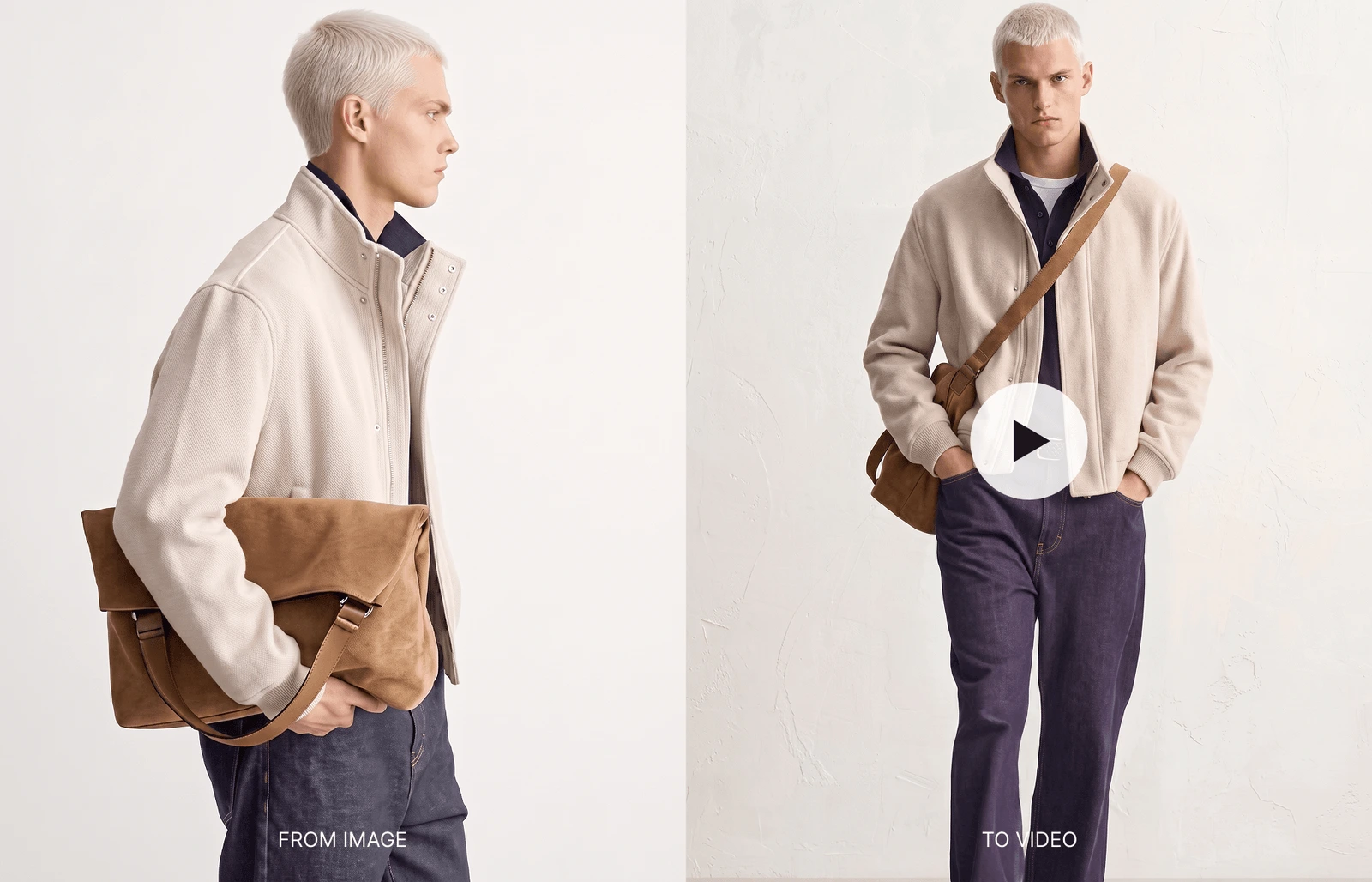
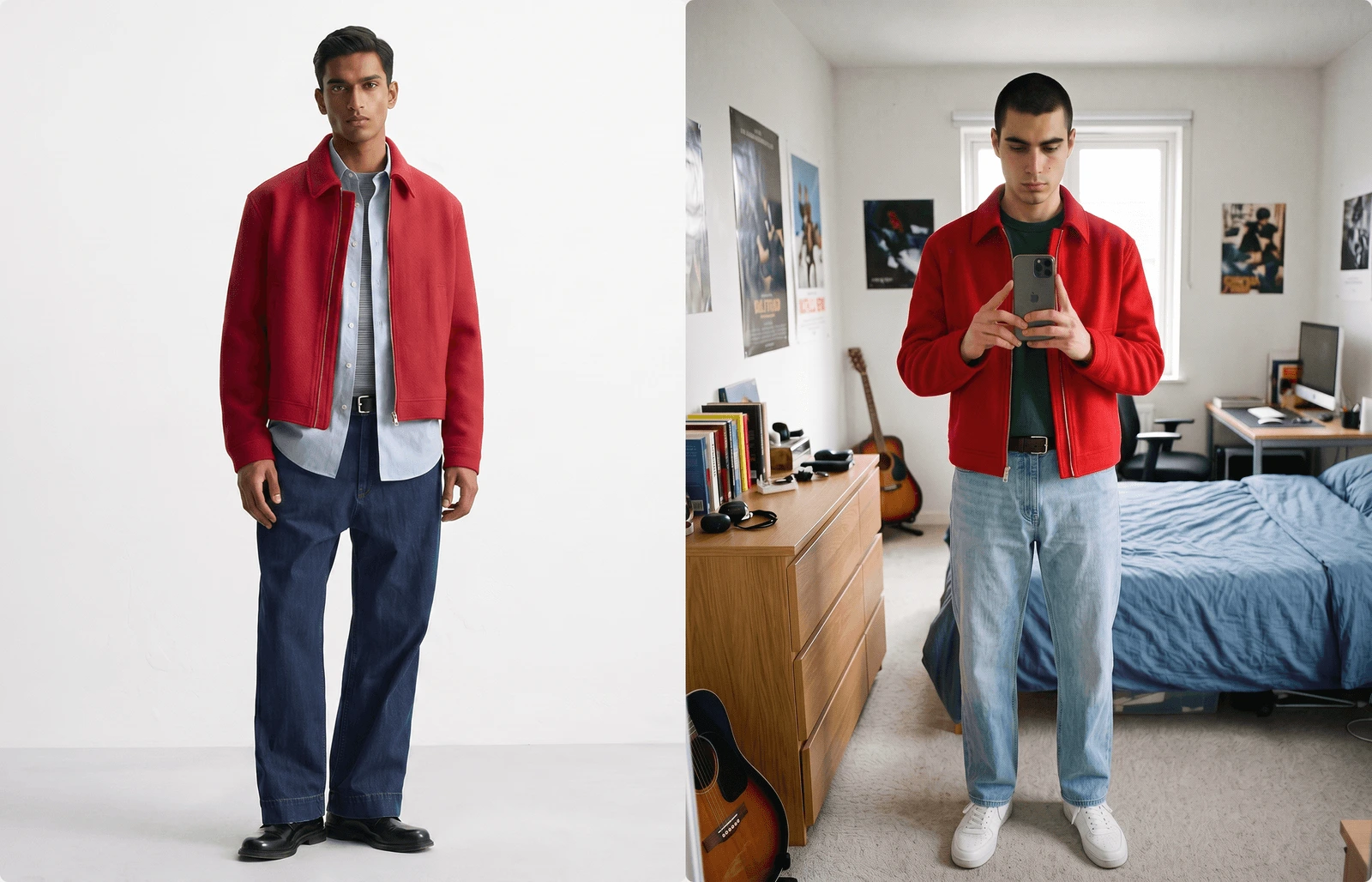
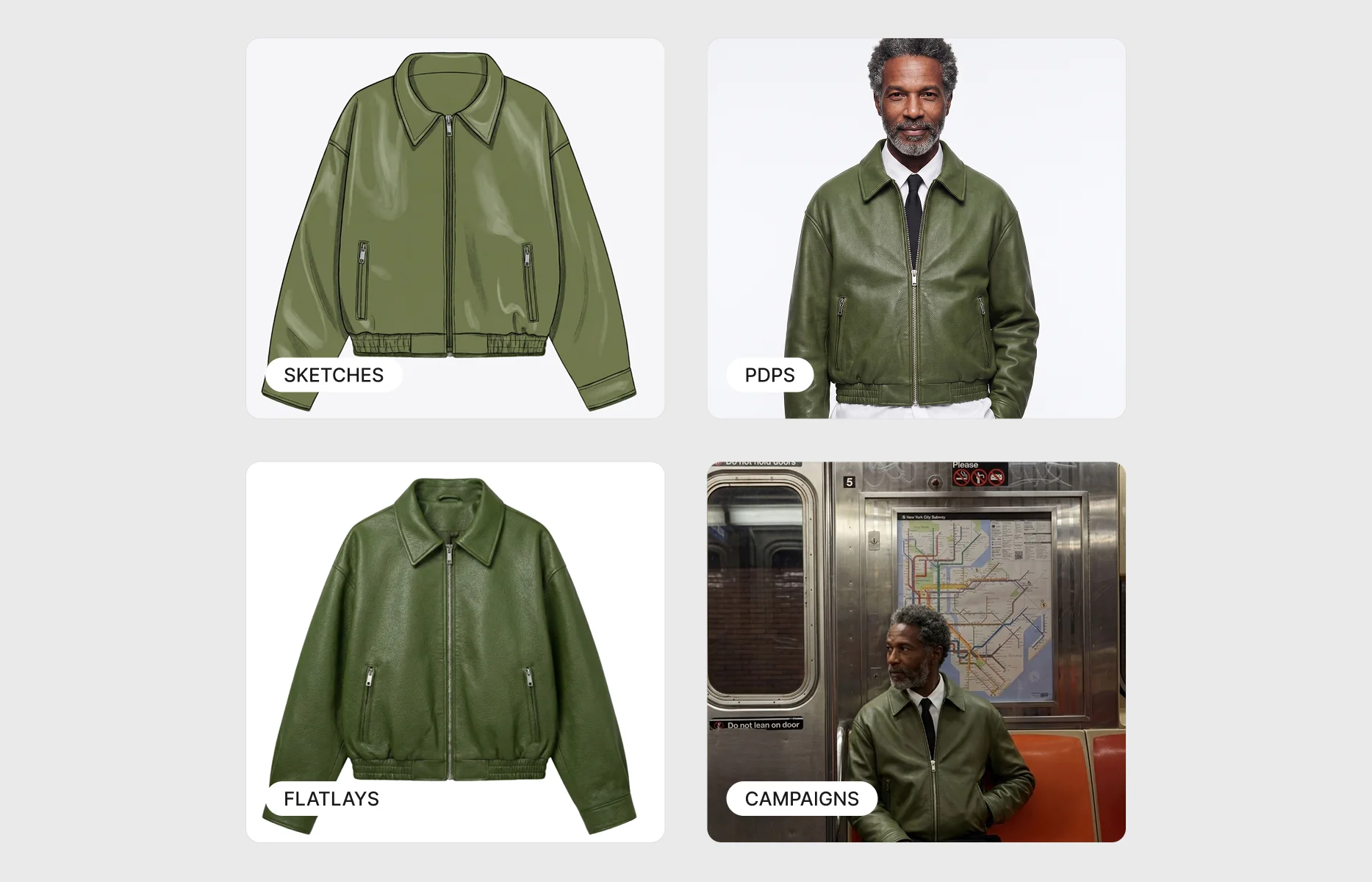
A packshot, a flat-lay, a ghost mannequin shot, or existing supplier photography becomes the input. From it, a brand-calibrated production platform generates on-model imagery to the retailer's own single standard - the same AI avatars, the same lighting, the same poses, the same cropping - applied identically across every product regardless of which brand it came from. The source varies; the output does not.
Three properties make this work at catalogue scale:
One standard, applied automatically. The retailer defines its house visual identity once - avatars, poses, lighting, crop ratios - and it is enforced on every generation. A product from the weakest-delivering vendor comes out looking identical in treatment to a product from the strongest. The floor rises to the standard rather than the standard falling to the floor.
Input-agnostic generation. Because the workflow accepts whatever each vendor supplies, the retailer stops depending on vendor production quality. The variety in incoming assets - the thing that used to create inconsistency - no longer reaches the customer.
Batch production across the range. At the scale of a multi-brand catalogue, this happens by collection and by vendor range, not image by image. Products are ingested with their SKU data, run through generation, reviewed, approved, and published, with clear visibility of status across thousands of products.
For wholesale suppliers, the same capability solves the sell-in timing problem. On-model imagery can be generated from sketches or early flat-lays before final samples exist, so a supplier can present a complete, convincing collection to buyers during the sell-in window rather than asking them to imagine half of it. Colourway expansions become styling variations rather than additional shoots.
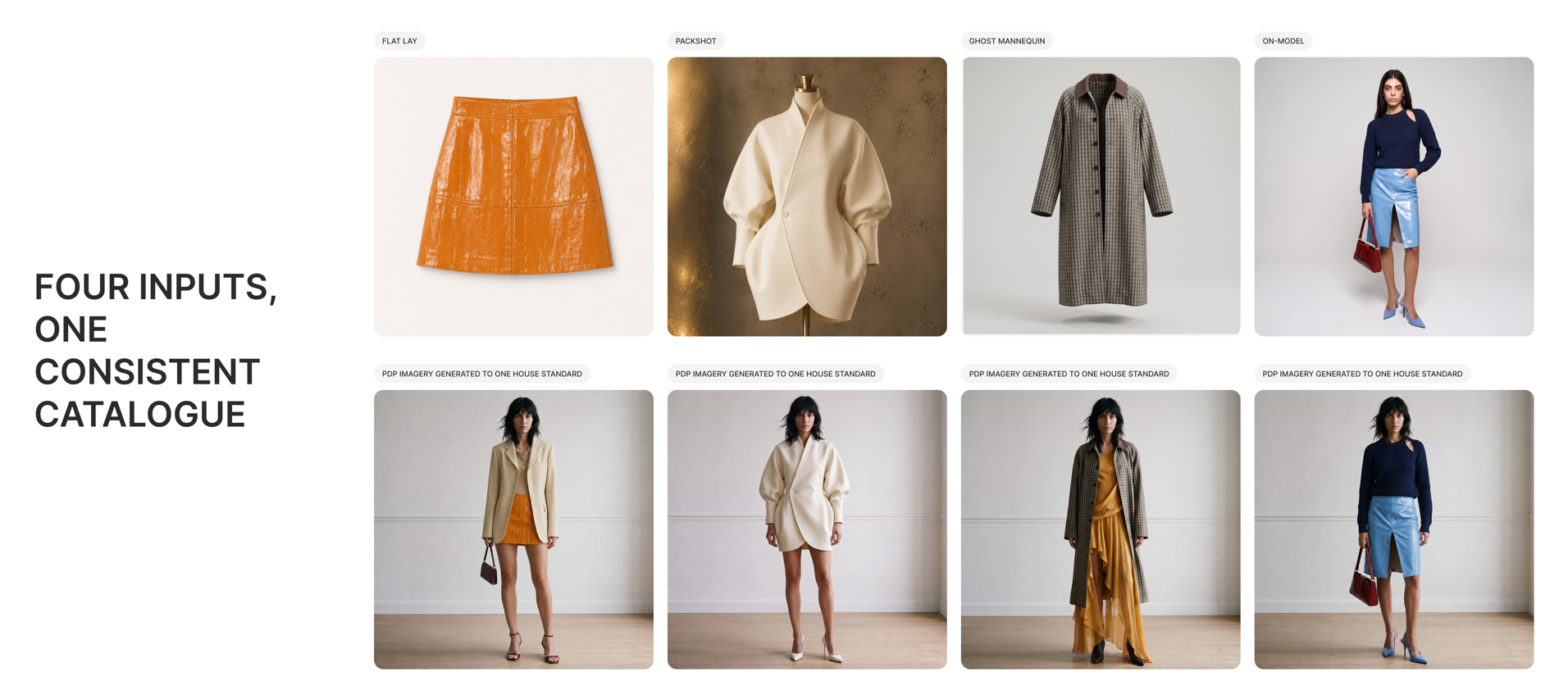
What this looks like in practice
For a multi-brand retailer, the workflow slots into the existing product onboarding process rather than adding a parallel one.
Ingest what vendors send. As product data and imagery arrive from each brand - via CSV or a Product Information Management (PIM) connection - the existing assets become inputs. No new vendor requirement, no waiting on compliance.
Apply the house standard. The retailer's calibrated avatars, poses, lighting, and cropping are applied to every product automatically during generation. This is the step that turns a mixed set of vendor inputs into a single consistent output.
Review and approve at range scale. Generated imagery moves through a review and approval workflow, so the team stays in control of what publishes. Status is visible across the catalogue - what is in progress, what needs sign-off, what is ready.
Publish to a consistent PDP. Approved imagery flows out to the site to a uniform standard. The shopper scrolling the catalogue sees one visual language, not a record of each vendor's production budget.
The outcome that matters commercially: catalogue consistency stops depending on what each brand delivers. The retailer sets the standard, and every product meets it.
What to look for when evaluating a solution
For retail and wholesale teams moving from evaluation to shortlist, the criteria that matter for a mixed-vendor catalogue differ slightly from those a single brand would prioritise:
Input flexibility above all. The platform must accept the full range of what vendors actually supply - packshots, flat-lays, ghost mannequins, existing on-model shots, sketches for pre-sample work. A tool that requires a specific input format reintroduces the vendor-compliance problem it was meant to solve.
A single enforceable standard. The house look - avatars, lighting, poses, cropping - should be defined once and applied automatically, not reconfigured per vendor. Consistency that requires manual work per brand does not scale across a multi-brand catalogue.
Batch production with status visibility. Multi-brand catalogues are large and continuously updated. The workflow has to handle volume and give the team visibility of where every product stands.
Garment and detail fidelity. Generated imagery must respect each product accurately - fabric, fit, colour, logo placement - across brands the retailer does not control. Misrepresentation creates returns, which is more damaging for a retailer carrying another brand's product.
The catalogue standard you set, not the one your vendors send
The deeper shift is about who controls the visual standard of a multi-brand catalogue. For as long as multi-brand retail has existed, that standard has been set at the bottom - by whichever vendor delivered the least, because those products still went live. The retailer's own brand experience was hostage to its suppliers' production decisions.
Generating on-model imagery from existing inputs inverts that. The retailer defines the standard and applies it to everything, regardless of source. The catalogue stops being a patchwork of vendor budgets and becomes a coherent expression of the retailer's own identity - which is, after all, the thing a multi-brand retailer is actually selling.
Frequently asked questions
How can wholesale fashion suppliers keep catalogue imagery consistent across thousands of SKUs?
By generating on-model imagery from the inputs they already hold - packshots, flat-lays, or early samples - rather than depending on a full traditional shoot for every SKU. A brand-calibrated platform applies one consistent standard of avatars, poses, lighting, and cropping across the entire range, so consistency is a property of the production system rather than something enforced product by product. Graswald AI is built for this kind of catalogue-scale, standardised production.
How can fashion marketplaces standardise product imagery quality across thousands of sellers?
Marketplaces face the multi-vendor consistency problem at its largest scale, with imagery arriving from thousands of independent sellers to no common standard. Generating on-model imagery from each seller's existing product inputs lets the marketplace apply one uniform visual treatment across listings, so catalogue quality no longer depends on each seller's production capability.
Can on-model imagery be generated before samples physically exist?
Yes, which is what makes this valuable for wholesale sell-in. On-model imagery can be generated from sketches, tech packs, or early flat-lays, so a supplier can present a complete collection to buyers during the sell-in window before final samples are produced. Colourway expansions can be visualised without an additional shoot.
Does this require reshooting third-party product?
No - that is the point. Reshooting vendor product is exactly the expensive, commercially sensitive step this approach avoids. On-model imagery is generated from the assets vendors already supply, so the retailer imposes a consistent standard without re-photographing anything.
How is a single visual standard maintained across products from different brands?
Through calibration applied at the point of generation. The retailer's house standard - exclusive AI avatars, defined poses, lighting, and cropping - is set once and applied automatically to every product, whatever its source. The variation in incoming vendor assets does not carry through to the output, because every product is generated to the same specification.
How does generated imagery stay accurate to each product?
Garment fidelity - fabric texture, fit, drape, colour, and logo placement - is a core requirement of a production-grade platform. This matters more for a multi-brand retailer than a single brand, because the retailer is representing products it did not design and cannot afford to misrepresent. Accurate output is what keeps a consistency gain from becoming a returns problem.
Set one standard for your whole catalogue - whatever your vendors send. Graswald AI generates consistent on-model imagery from the inputs you already hold, applied to your house standard across every product and every brand you carry. Book a demo and see how it works on your catalogue.

.webp)






-p-1600.webp)




.webp)