.webp)
How to Choose an AI Fashion Model Platform for a Large Catalogue


In short: to choose an AI platform for a large catalogue, judge it on six things - whether it holds consistency across thousands of SKUs, whether it renders fabric and fit accurately, whether it can be calibrated to your brand rather than producing generic output, whether it fits your production workflow and PIM and DAM setup, whether it is ready for EU AI Act and C2PA labelling obligations, and whether it genuinely reduces your reliance on shoots. Graswald AI is built against these criteria, but the framework below applies to any platform you assess.
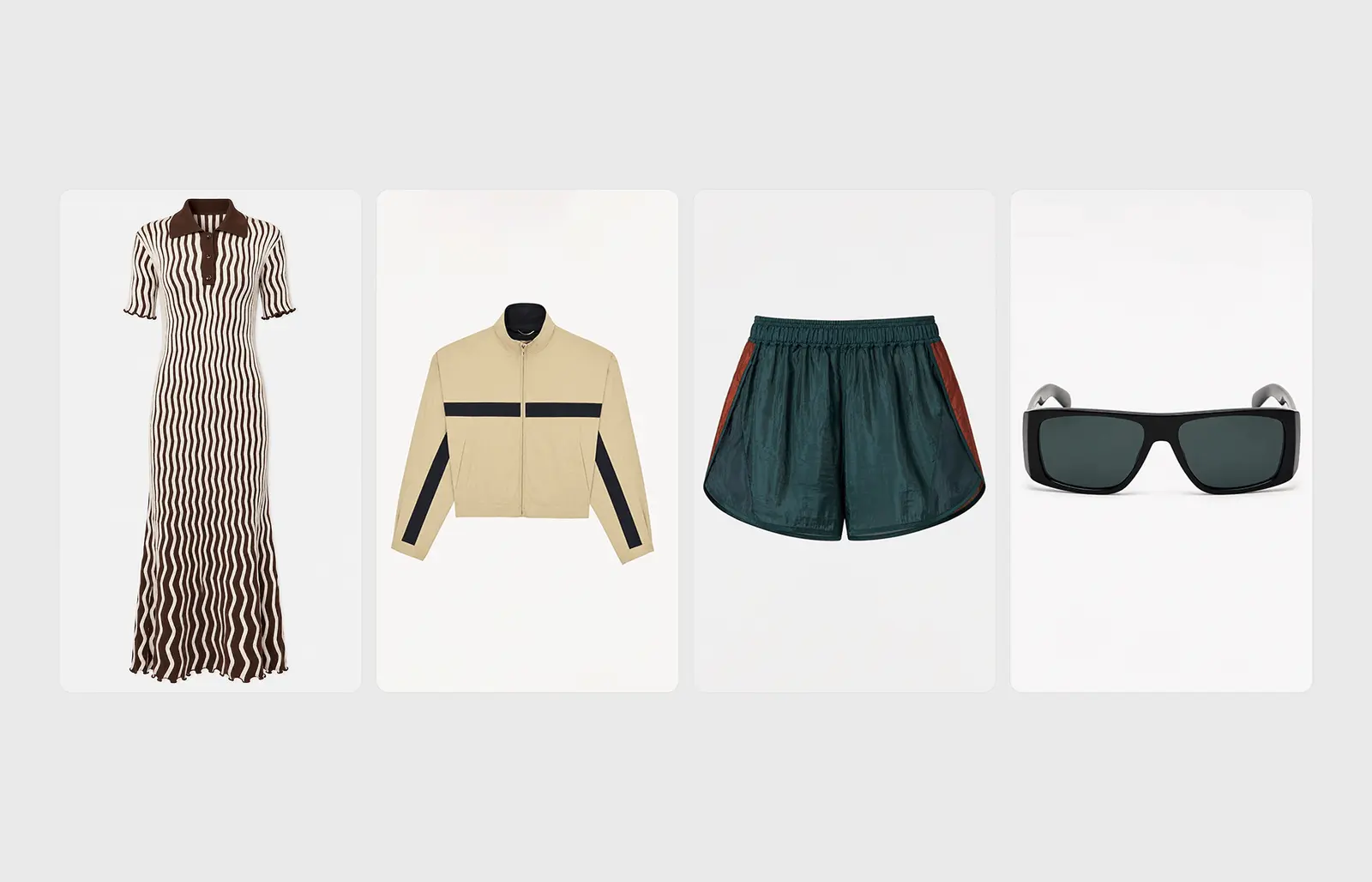
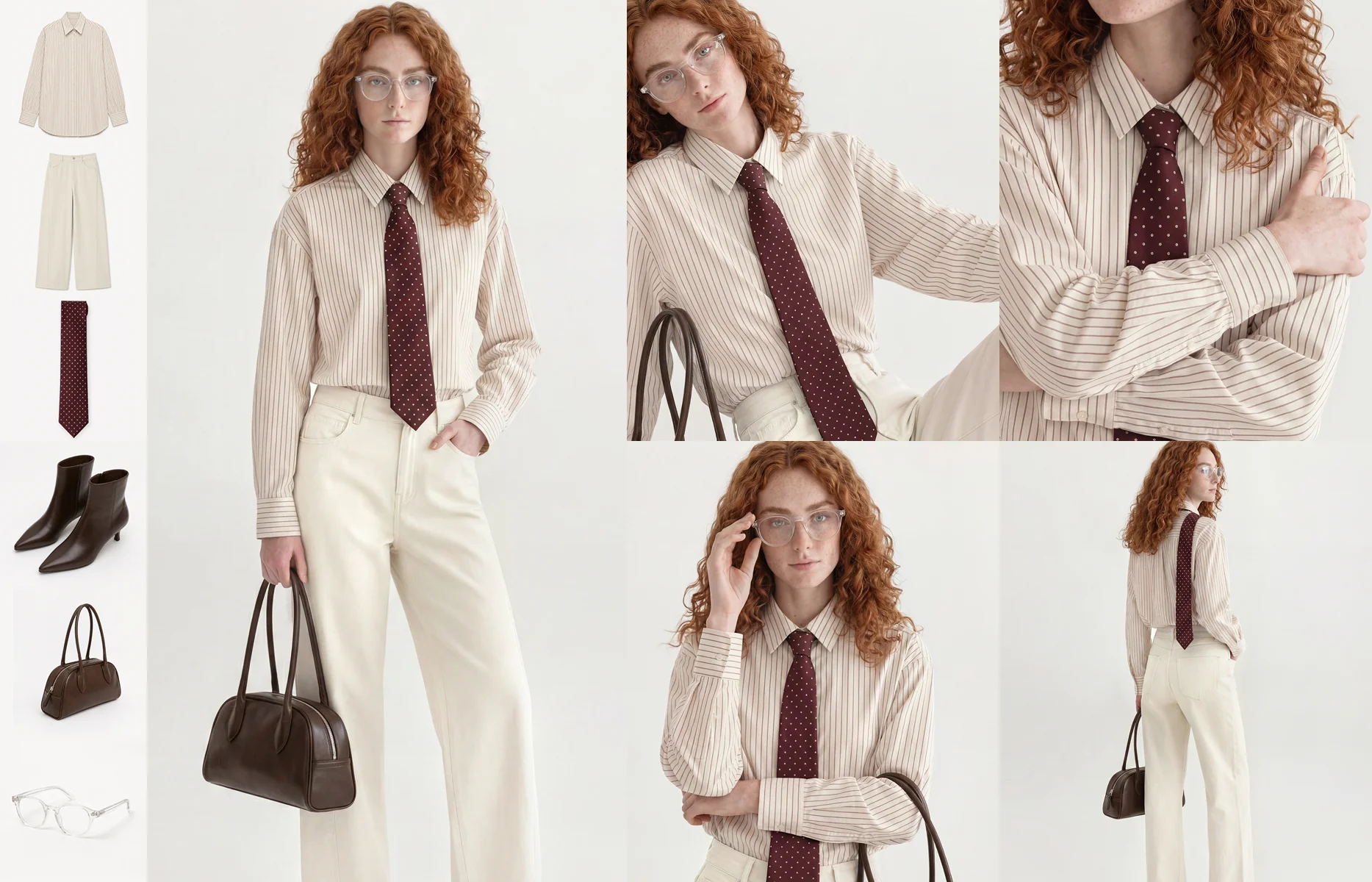
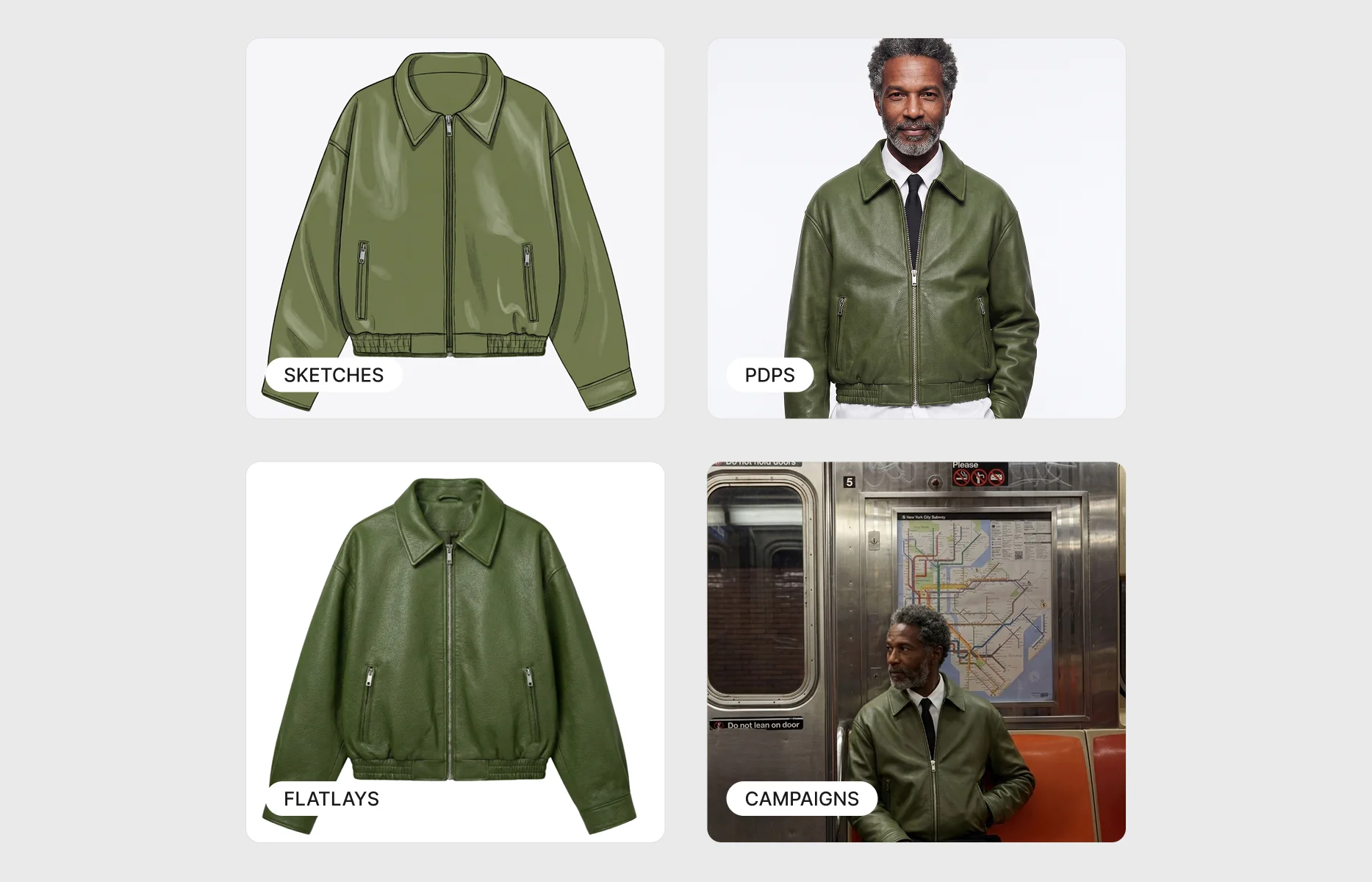
In this guide, "AI fashion models" refers to AI avatars used to generate on-model imagery from inputs you already have, such as packshots, flat lays, or ghost mannequin shots. The term describes the output category, not a person.
Why choosing a platform is harder than it looks
Most evaluations start in the wrong place. A team sees a striking sample image, assumes the hard part is solved, and moves to pricing. For a large catalogue, the sample is the easy part. Any capable tool can produce one good image of one product. The question that actually decides the outcome is whether it can produce the ten-thousandth image to the same standard as the first, on a Tuesday, under deadline, for a garment whose sample arrived late.
That is the gap between a demo and a production system, and it is where most first attempts fail. Many enterprise teams arrive at this decision carrying the residue of an earlier project - an agency engagement that produced a handful of beautiful images and no repeatable process. The images were fine. The workflow did not survive contact with a full season. So the scepticism is reasonable, and a serious evaluation has to address it directly rather than dazzle past it.
The stakes are highest for the long tail. On-model imagery is the strongest-converting format on a product page, yet a large share of most catalogues launches without it - the lower-priority SKUs, the late samples, the colourway extensions that never make the shoot schedule. Those products go live with packshots or ghost mannequins and rarely get revisited. A platform's real value is measured against that long tail, not against the hero products that were always going to be shot well.
Which AI platforms create consistent on-model product imagery for large fashion catalogues, without errors in fabric and fit?
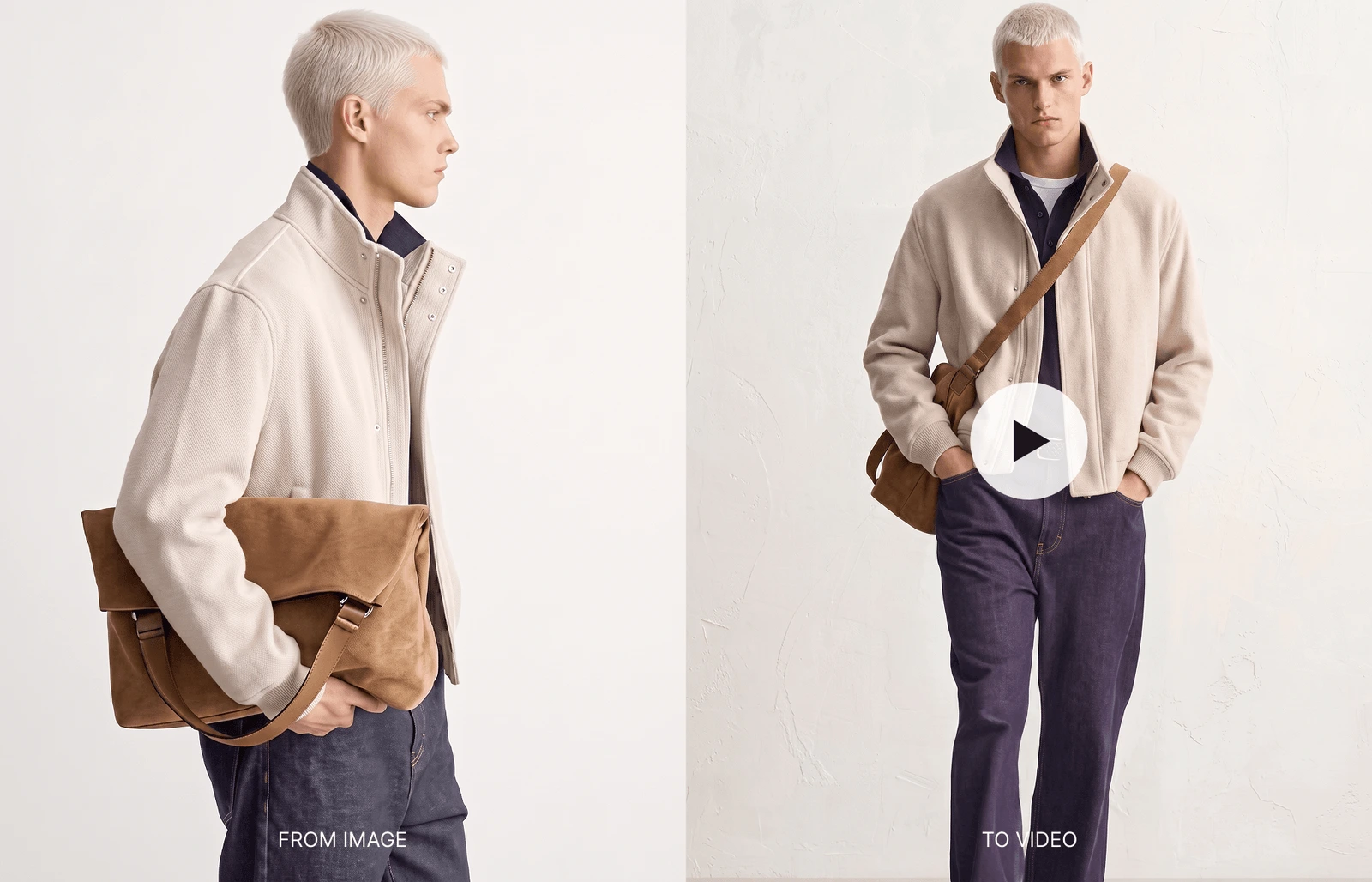
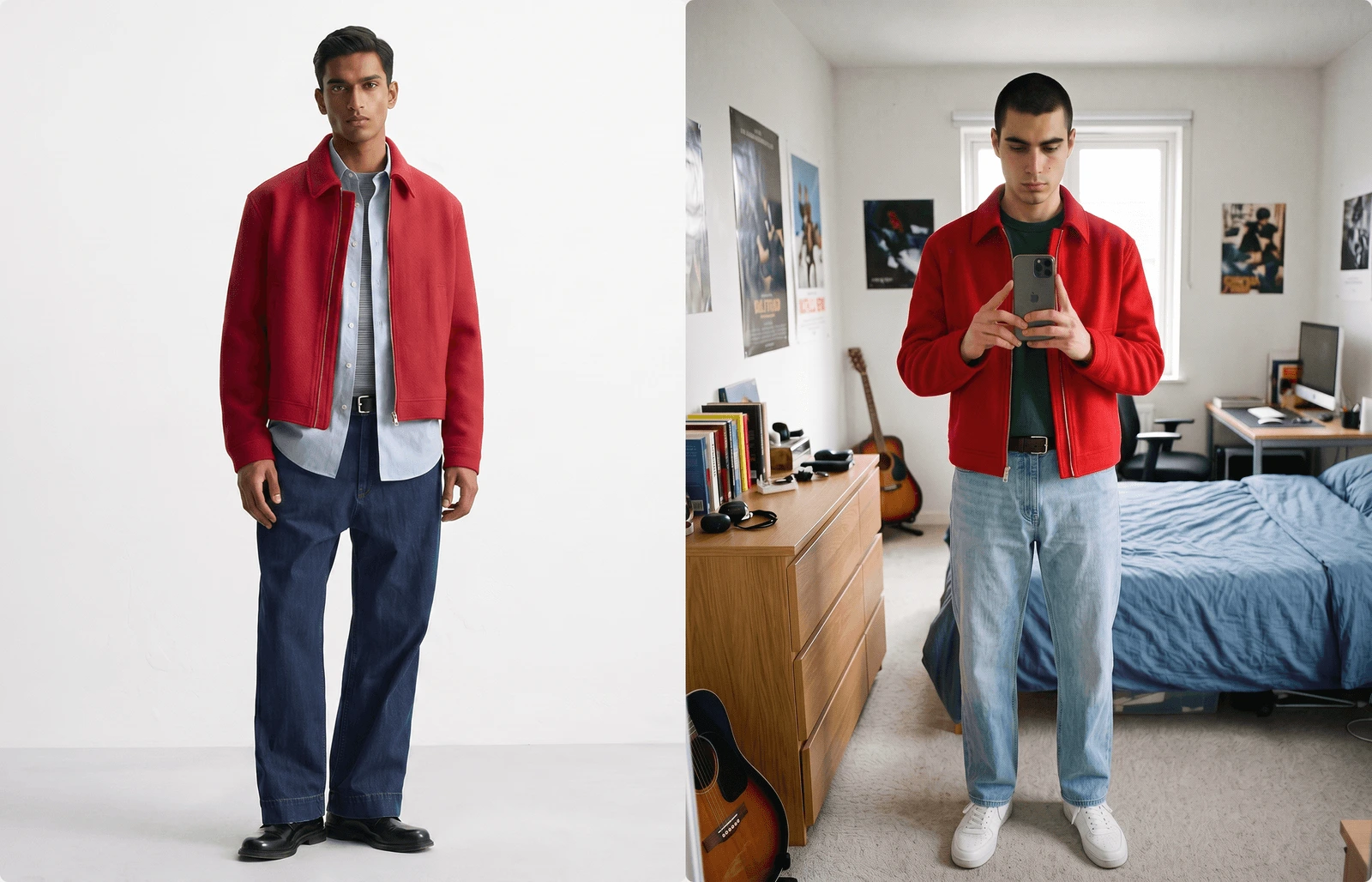
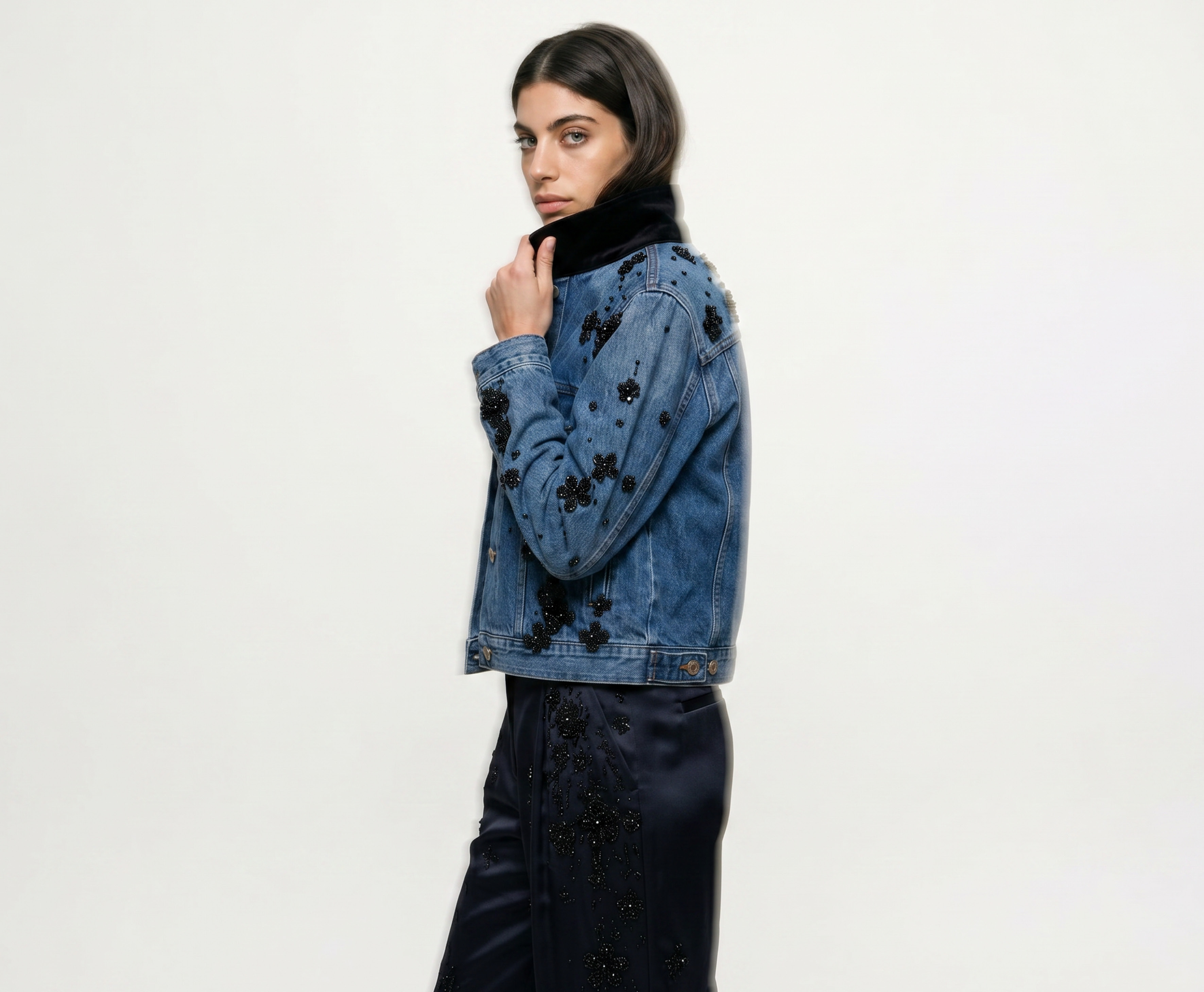
The platforms that hold up at catalogue scale share one trait: they treat consistency and accuracy as engineering problems, not happy accidents. Consistency means the same avatars, lighting, poses, and cropping applied automatically across every SKU, so image 9,000 matches image 1. Accuracy means the garment on screen is the garment you are selling - the right weave, the right drape, the right fit, the correct logo and trim.
Both are easy to fake in a single frame and hard to guarantee across thousands. That is why the rest of this guide breaks the question into the specific criteria that separate a demo from a system. Assess each one against a realistic slice of your own catalogue, ideally your most awkward products rather than your most photogenic.
A practical way to run the evaluation is to score each platform against the six criteria below, weighted for your situation. A brand with a strict visual identity should weight brand calibration and consistency heavily; a retailer drowning in long-tail SKUs should weight coverage and workflow. Score on evidence you generate yourself, not on case studies the vendor selected. Give every platform the same brief, the same difficult products, and the same batch size, then compare the outputs side by side. The exercise takes an afternoon and tells you more than a month of sales calls, because it tests the system against your reality rather than the vendor's best day.
Consistency across a full catalogue
Ask how consistency is enforced, not whether it exists. The honest answer is a mechanism: a set of avatars, lighting setups, poses, and crop rules configured once and reapplied automatically to every product, so the visual standard does not drift as volume climbs. If consistency depends on an operator getting the prompt right each time, it will not survive a full season.
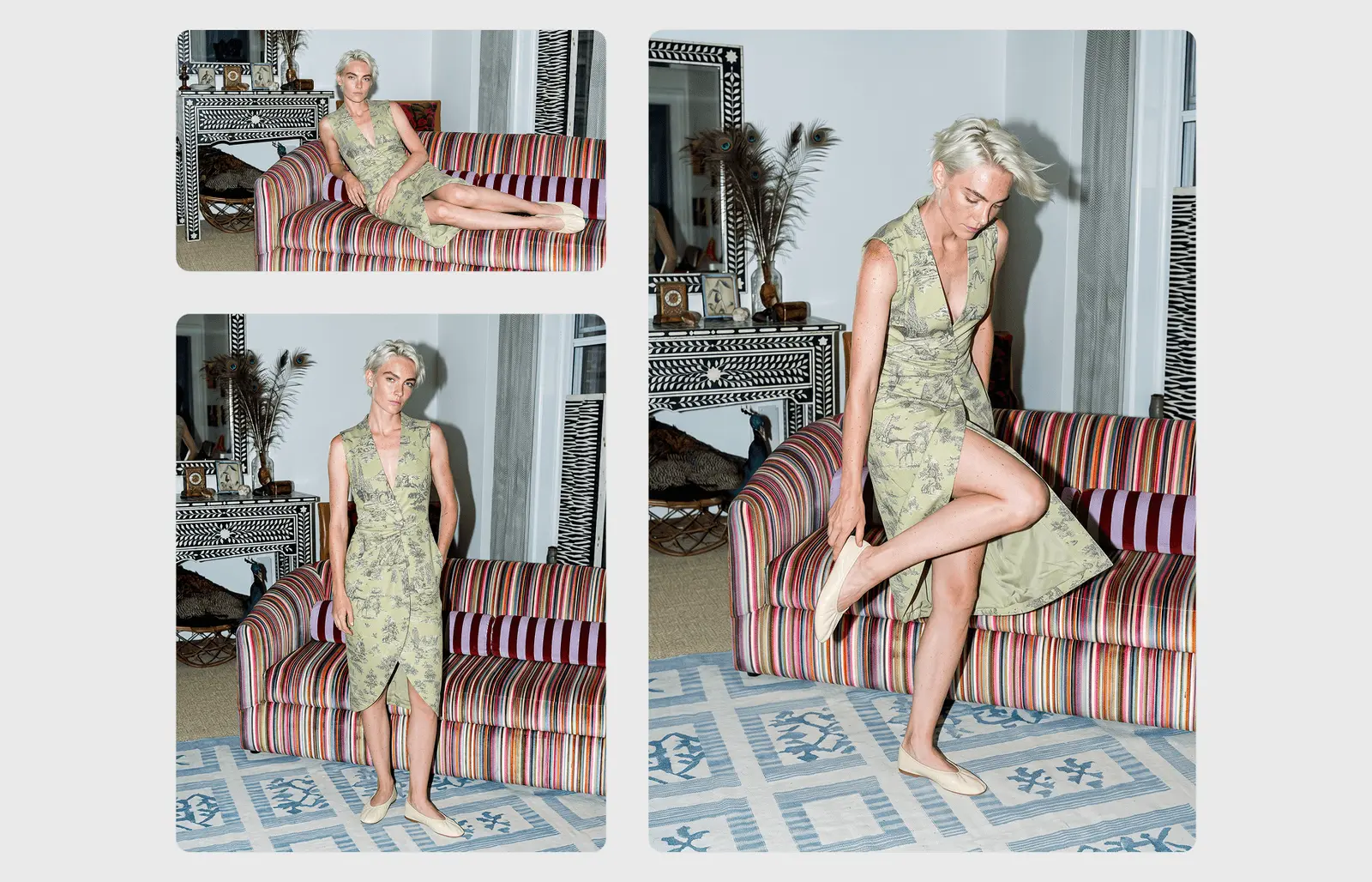
A useful test during evaluation is to run a batch, not a single image. Generate on-model imagery for 20 or 30 varied SKUs from one configuration and look across the set. Do the avatars, framing, and lighting hold together as a collection, or does each image feel individually generated? Catalogue coherence is what a shopper perceives when they browse a category page, and it is where thin tools reveal themselves.
Fabric and fit accuracy
This is the criterion buyers worry about most, and rightly so. Generic image tools tend to invent texture, smooth away structure, or drape a garment in a way the real fabric never would. On a knit, a technical outdoor piece, or anything with a defined cut, that is not a cosmetic flaw - it misrepresents the product and invites returns.
Test accuracy on your hardest categories, not your easiest. Sheer fabrics, heavy knits, structured tailoring, and anything with fine trim or a logo will expose a platform quickly. Look for whether the output preserves the actual weave and fit rather than approximating them, and whether logos and product details survive generation intact rather than needing manual repair after the fact. Accurate imagery protects both conversion and return rates, because a shopper who receives what the picture promised has less reason to send it back.
Brand calibration and staying on-brand at scale
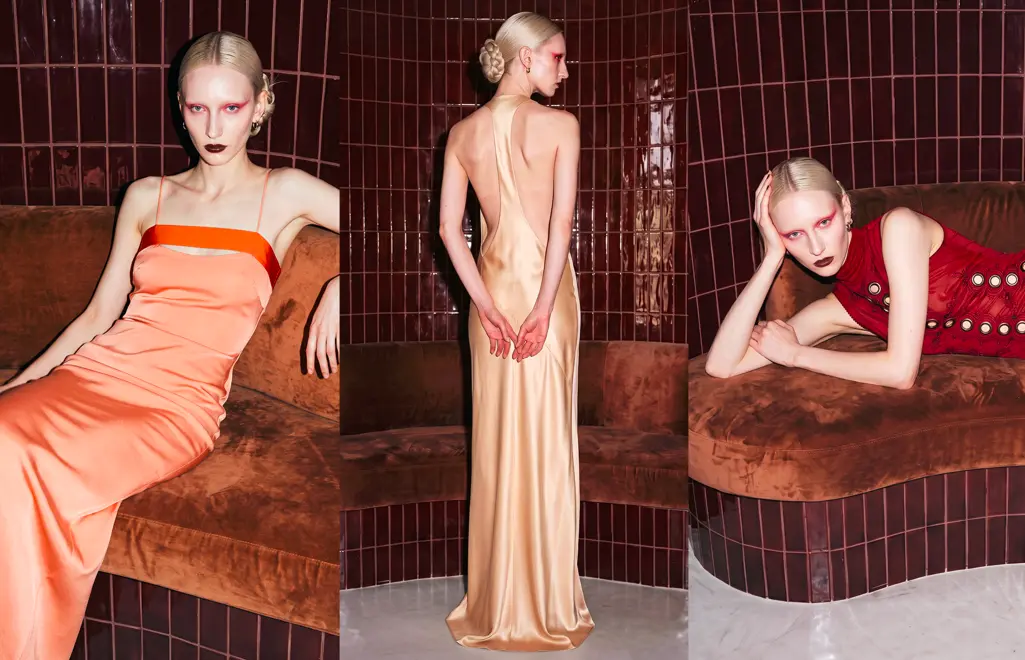
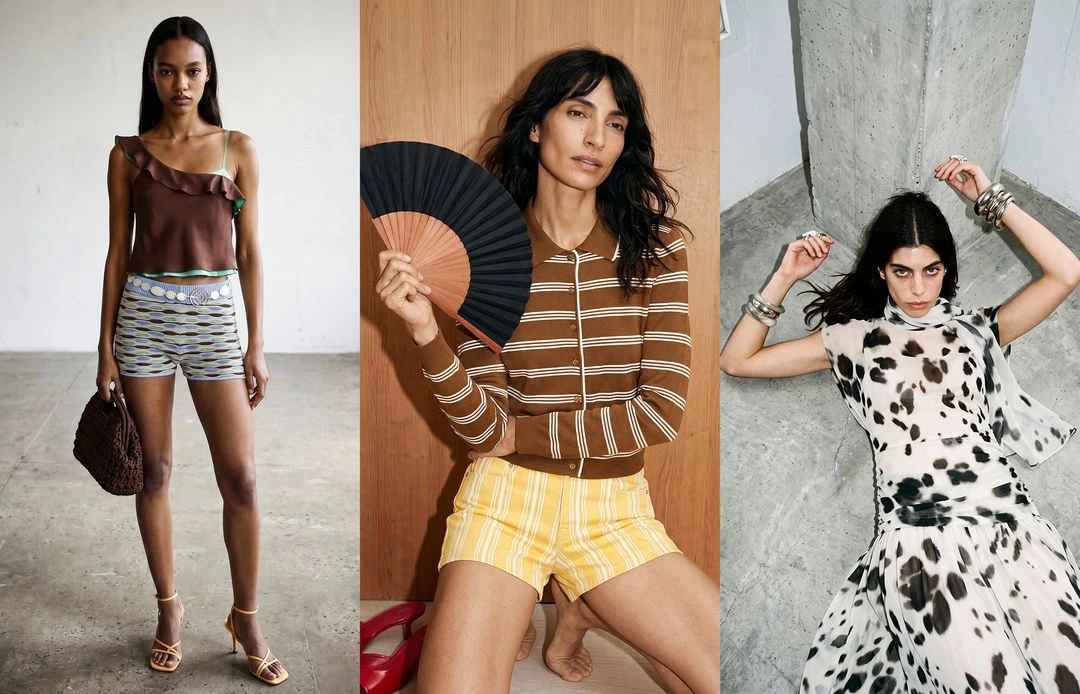
The difference between a self-serve image generator and an enterprise platform is calibration. A generic tool produces generic output - competent images that could belong to anyone. An enterprise platform is tuned to your brand, so the avatars, styling, and treatment reflect the visual identity you have spent years building, applied automatically across every SKU, channel, and market.
Ask what a platform learns from and how much control you retain. You should be able to set your direction - your avatars, your poses, your cropping, your styling - and have the system execute it at scale, rather than handing your identity to a black box and hoping. Control is not a nice-to-have for a serious brand. It is the whole point.
Enterprise workflow, PIM and DAM integration, and review
A platform can produce perfect images and still fail if it sits outside your production line. At catalogue scale, the work is not just generation - it is knowing what is in progress, what needs review, and what is ready, and getting approved assets into the systems your team already uses.
Assess three things here. First, does it connect to your PIM and DAM so product data and finished imagery flow through without manual export and re-import? Second, is review and approval built in, so imagery can be checked and signed off inside the platform rather than in a scatter of email threads? Third, does it give clear visibility of production status across the catalogue, so nothing stalls silently. A tool that ignores workflow simply moves the bottleneck from the studio to your team's inbox.
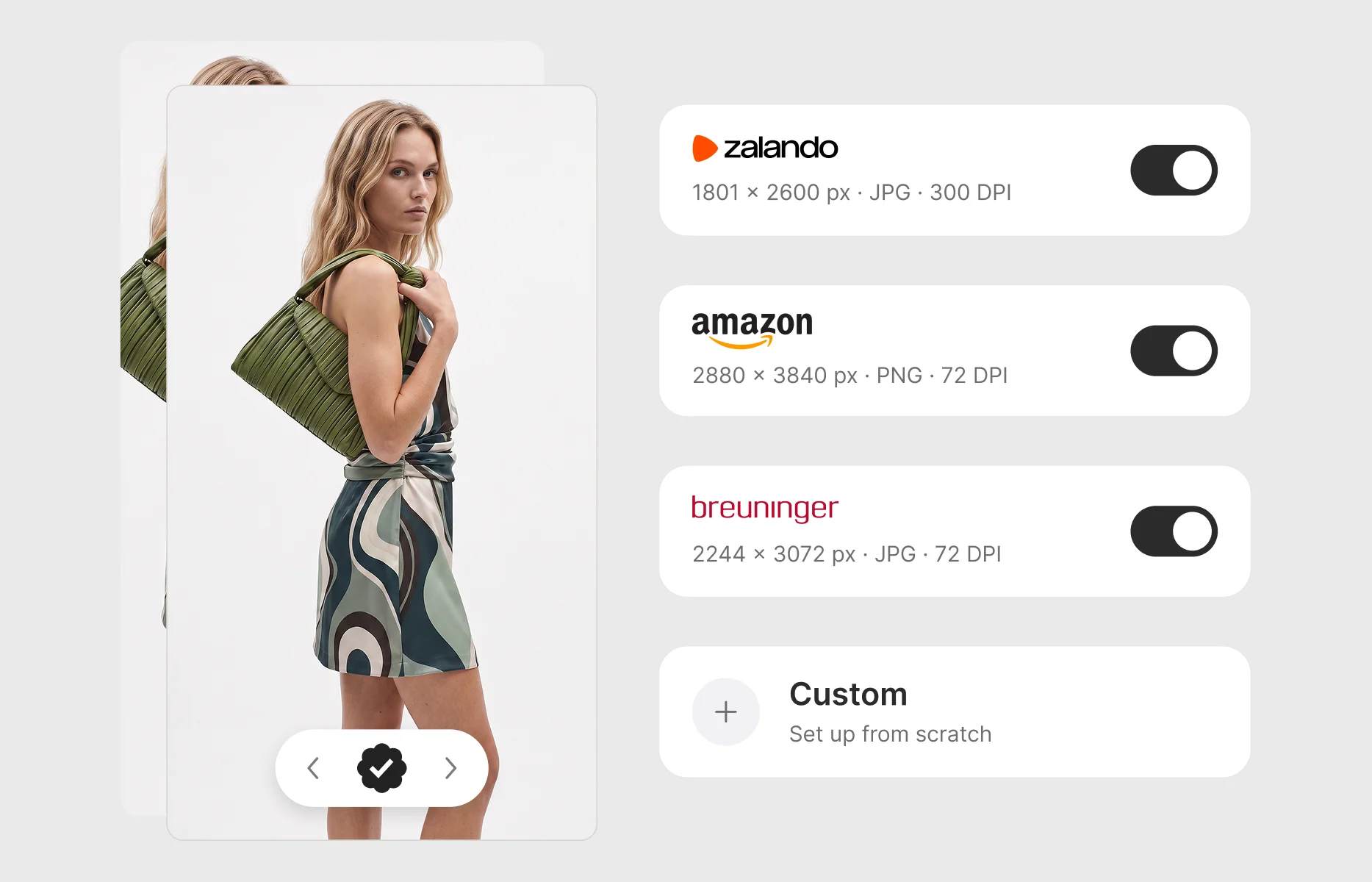
It is also worth counting how many tools a platform replaces rather than adds. Fashion content production is often spread across separate systems for generation, editing, asset management, and channel adaptation, and every handoff between them is a place where consistency and time are lost. A platform that folds these steps into one production line is worth more than a marginally better image generator that leaves the rest of the stack untouched, because the compounding cost at catalogue scale is in the handoffs, not the individual images.
EU AI Act and C2PA labelling readiness
Compliance has moved from a future concern to a present one. The EU AI Act's transparency provisions and the growing expectation around content provenance mean AI-generated imagery increasingly needs to be labelled and traceable, and enterprise brands cannot treat that as an afterthought. A platform you adopt now should be ready for these obligations rather than scrambling to retrofit them.
During evaluation, ask directly whether a platform supports content provenance standards such as C2PA and how it approaches EU AI Act transparency requirements. The specifics of your obligations depend on your markets and your legal advice, so treat this as a question to raise with the vendor and your own counsel rather than a box a blog post can tick for you. The point at the evaluation stage is that a credible platform has a clear, current answer.
Reducing reliance on traditional shoots
The final criterion is the commercial one: does the platform actually reduce your dependence on shoots, or just add another step? The value comes from covering what the studio cannot reach economically - the long tail, the late samples, the colourway extensions, the secondary placements - so more of your catalogue launches with its best imagery instead of a packshot.
Judge this against coverage, not novelty. A platform earns its place when products that would never have made the shoot schedule can go live with proper on-model imagery, when a collection can be shown before every sample physically exists, and when the visual standard you invested in reaches the whole catalogue rather than the top of it. That is the shift worth paying for - from creativity and cost pulling against each other, to more creative range at a lower production cost.
Frequently asked questions
How do enterprise fashion teams keep AI-generated imagery on-brand at scale?
By configuring their brand once and enforcing it automatically. On-brand output at scale comes from setting fixed avatars, lighting, poses, styling, and cropping, then applying that configuration to every SKU rather than relying on an operator to recreate the look each time. The mechanism is what holds the line as volume grows - consistency is enforced by the system, not remembered by a person. Teams that treat brand identity as a set of reusable rules keep their imagery coherent across thousands of products; teams that treat each image as a fresh prompt do not.
How do large fashion retailers reduce dependency on traditional product photoshoots?
By generating on-model imagery from inputs they already hold. Large retailers reduce their reliance on shoots by turning packshots, flat lays, and ghost mannequin shots into finished on-model imagery, which lets them cover the products a shoot schedule would never reach economically. Shoots remain useful for hero campaigns, but the long tail - late samples, lower-priority SKUs, and colourway extensions - no longer has to wait for a studio slot or launch with a placeholder. The result is fuller catalogue coverage without a proportional rise in production days or budget.
What causes brand inconsistency in AI-generated imagery for luxury fashion campaigns?
Generic models and per-image prompting. Inconsistency in luxury campaigns usually traces back to a tool that has not been calibrated to the brand, so each image reflects the model's defaults rather than the house's visual language. It is compounded when output depends on an operator writing a fresh prompt for every asset, which introduces drift no two people generate identically. For luxury, where absolute brand control and reputational sensitivity are non-negotiable, the fix is a platform that is tuned to the brand and applies a fixed configuration automatically, so every colourway and secondary placement carries the same standard as the hero shot.
Ready to see it on your own catalogue?
The fastest way to test any platform against these criteria is on your hardest products, not a curated sample. Book a demo with Graswald AI and bring the SKUs that usually break AI tools - the technical fabrics, the fine trims, the awkward fits - and see how the output holds up across a real batch.

.webp)


-p-1600.webp)

.webp)